Hey there! As a supplier of rigid pipe supports, I often get asked this question: Can a rigid pipe support be used for both horizontal and vertical pipes? Well, let's dig into this topic and find out.
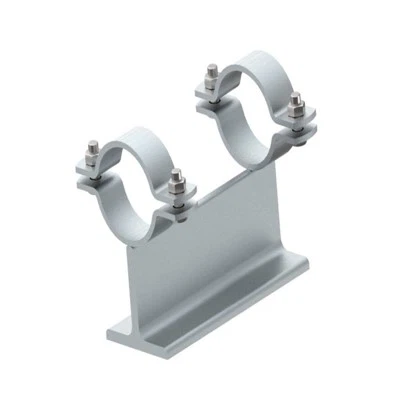
First off, let's understand what rigid pipe supports are. They're designed to hold pipes in place, preventing excessive movement, vibration, and misalignment. They come in various types, each with its own unique features and applications. For instance, we've got the Pipe Saddle Support, which is like a cozy seat for the pipe, providing stable support. Then there's the T-Type Pipe Supports with Clamp, which uses a clamp to secure the pipe firmly, and the T-Type Pipe Support with Wear Pad, which has a wear pad to reduce friction and protect the pipe.
Now, back to the question. Can one rigid pipe support work for both horizontal and vertical pipes? The answer is, it depends.
Factors to Consider
1. Load-Bearing Capacity
Horizontal and vertical pipes have different load - bearing requirements. Horizontal pipes mainly have to deal with the weight of the fluid inside the pipe and the pipe itself. The load is distributed along the length of the support. On the other hand, vertical pipes have to support the weight of the pipe and the fluid column above the support point. This means that the load on a vertical pipe support is concentrated at the support location.
A rigid pipe support that can handle the relatively evenly - distributed load of a horizontal pipe might not be able to handle the concentrated load of a vertical pipe. For example, if a support is designed for a horizontal pipe with a light - weight fluid and a thin - walled pipe, it might buckle under the weight of a vertical pipe filled with a heavy fluid like oil or a thick - walled pipe.
2. Movement and Expansion
Pipes expand and contract due to temperature changes. Horizontal pipes usually expand or contract along their length. A rigid support for a horizontal pipe needs to allow for this linear movement. It might have some flexibility in the longitudinal direction to accommodate the expansion and contraction.
Vertical pipes, however, expand or contract vertically. The support for a vertical pipe has to be designed in a way that it doesn't restrict this vertical movement. If a support that is designed for horizontal pipes is used for a vertical pipe, it might prevent the pipe from expanding or contracting properly, leading to stress build - up in the pipe, which can cause leaks or even pipe failure.
3. Alignment and Stability
Horizontal pipes need to be kept level to ensure proper fluid flow. A support for a horizontal pipe is designed to maintain this level alignment. It might have a flat surface or a specific shape to keep the pipe in the correct position.


Vertical pipes need to be kept plumb. A support for a vertical pipe has to prevent the pipe from tilting or swaying. Using a support designed for horizontal pipes on a vertical pipe might not provide the necessary stability and alignment for the vertical pipe.
When It Can Work
In some cases, a rigid pipe support can be used for both horizontal and vertical pipes.
1. Low - Load Situations
If the pipes are small - diameter and carry a light - weight fluid, the load requirements for horizontal and vertical pipes might be similar. For example, small - diameter pipes carrying water in a residential plumbing system. In such cases, a simple and sturdy rigid support can be used for both horizontal and vertical orientations. The load on the support is relatively low, and the expansion and contraction are also minimal.
2. Specialized Designs
Some rigid pipe supports are designed to be versatile. They are engineered to handle different load directions and movement requirements. These specialized supports often have adjustable features or a unique construction that allows them to adapt to both horizontal and vertical pipes. For example, a support with a multi - directional adjustment mechanism can be adjusted to provide the right support for both horizontal and vertical orientations.
Making the Right Choice
As a supplier, I always recommend assessing the specific requirements of your piping system before choosing a rigid pipe support. Here are some steps to follow:
1. Analyze the Pipe System
Understand the size of the pipes, the type of fluid they carry, the operating temperature, and the expected expansion and contraction. This information will help you determine the load - bearing capacity and movement requirements for the supports.
2. Consider the Orientation
If you have both horizontal and vertical pipes in your system, evaluate whether a single type of support can meet the needs of both. If not, choose different supports for each orientation.
3. Consult an Expert
If you're not sure about which support to choose, it's always a good idea to consult with an engineer or a piping specialist. They can provide you with detailed advice based on your specific situation.
Conclusion
So, while it's possible for a rigid pipe support to be used for both horizontal and vertical pipes in some cases, it's not a one - size - fits - all solution. You need to carefully consider the load - bearing capacity, movement requirements, and alignment needs of your piping system.
As a supplier of high - quality rigid pipe supports, we've got a wide range of products to meet your needs. Whether you need a support for a horizontal pipe, a vertical pipe, or a system with both orientations, we can help you find the right solution. If you're interested in learning more about our products or need help with choosing the right rigid pipe support for your project, don't hesitate to get in touch. We're here to assist you with all your piping support needs and look forward to discussing your requirements further.
References
- "Piping Design Handbook" by George A. Antaki
- "Pipe Support Engineering" by Pipe Support Institute