

Recently, with the rising demand for industrial energy conservation, air coolers have attracted much attention due to their advantages of water conservation and strong adaptability. These devices, which use air as the cooling medium, have evolved into various types to meet the needs of different scenarios. This article summarizes the characteristics of the mainstream types.
Forced Draft Air Coolers: Preferred for Small and Medium-Sized Units
Forced draft air coolers rely on fans to drive air flow and exchange heat with air through finned tubes. Their core advantages lie in compact size, high cooling efficiency, and adjustable cooling effect by regulating fan speed. Currently, they are widely used in small and medium-sized petrochemical units and auxiliary cooling systems of power generation units, and are particularly suitable for workshop environments with limited space.
Natural Draft Air Coolers: Mainstay of Large-Scale Projects
Natural draft air coolers drive air flow through thermal pressure formed by the density difference between hot and cold air, without the need for fans. They feature low noise and low maintenance costs. This type is mostly applied in large-scale thermal power plants, coal chemical projects, etc., and can meet the requirements of high-load and long-term operation.
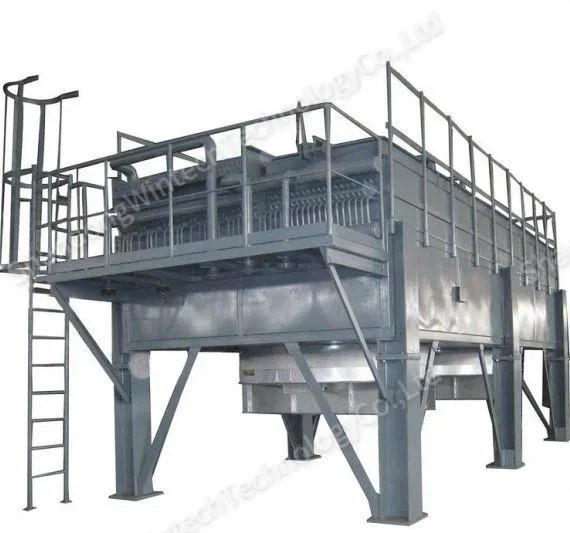
Combined and Evaporative Air Coolers: Adapted to Special Scenarios
Combined draft air coolers integrate the advantages of forced and natural draft, and can switch operating modes according to load changes, demonstrating outstanding energy efficiency in intermittent production scenarios. Evaporative air coolers enhance heat exchange through water evaporation, balancing water conservation and high efficiency, making them the preferred choice for industrial cooling in water-scarce areas.
Industry insiders stated that different types of air coolers are suitable for different scenarios, and enterprises need to select models scientifically based on factors such as production capacity and environment.


