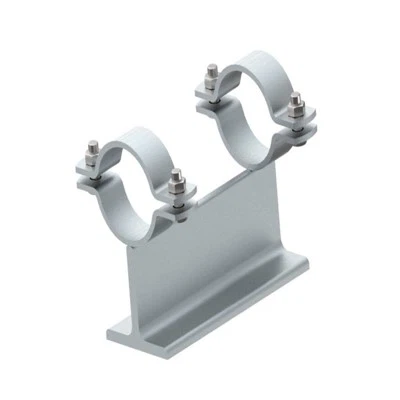
As a seasoned supplier of spring support and hanger products, I understand the critical importance of proper installation and inspection. Spring support and hangers play a vital role in ensuring the stability and safety of various pipeline systems. They help to absorb vibrations, accommodate thermal expansions and contractions, and maintain the correct alignment of pipes. In this blog, I will delve into the key inspection items for spring support and hanger during installation.
1. Visual Inspection
The first step in the installation inspection process is a thorough visual examination. This involves checking the physical condition of the spring support and hanger components.
- Check for Damage: Inspect the springs, rods, brackets, and other parts for any signs of cracks, dents, or deformation. Damaged components can compromise the performance and safety of the support and hanger. For example, a cracked spring may not be able to provide the necessary support force, leading to excessive vibrations or even pipe failure.
- Verify Dimensions: Ensure that the dimensions of the spring support and hanger match the design specifications. Incorrect dimensions can result in improper fitment, which may cause stress concentrations and premature wear. Measure the length, width, height, and other relevant dimensions to confirm accuracy.
- Inspect Coating: Examine the coating on the components for uniformity and integrity. A good coating provides corrosion resistance, which is essential for long - term durability, especially in harsh environments. Look for any signs of peeling, chipping, or rust spots on the coating.
2. Spring Inspection
The spring is the core component of spring support and hanger, and its proper functioning is crucial.
- Load Rating: Confirm that the spring's load rating is appropriate for the actual load it will bear. Incorrect load rating can lead to either over - stressing or under - stressing of the spring. Over - stressing may cause the spring to fail prematurely, while under - stressing may result in insufficient support for the pipeline. Refer to the design documents and calculate the expected load based on factors such as pipe weight, fluid weight, and thermal loads.
- Deflection: Measure the spring's deflection. The deflection should be within the specified range according to the design. If the deflection is too large or too small, it indicates that the spring may not be working correctly. Use a suitable measuring tool, such as a dial indicator, to accurately measure the deflection.
- Spring Rate: Check the spring rate, which is the amount of force required to compress or extend the spring by a unit length. A consistent and accurate spring rate is essential for maintaining the stability of the pipeline. Deviations from the specified spring rate can affect the support performance.
3. Mounting and Installation Inspection
Proper mounting and installation are essential for the effective operation of spring support and hanger.
- Alignment: Ensure that the spring support and hanger are correctly aligned with the pipeline. Misalignment can cause uneven loading on the support and hanger, as well as on the pipeline itself. This may lead to increased stress, vibrations, and potential damage to the pipeline. Use alignment tools, such as laser levels, to ensure accurate alignment.
- Fastening: Check the fastening of all components, including bolts, nuts, and welds. Loose fasteners can cause the support and hanger to shift or become detached, posing a significant safety risk. Make sure that the bolts are tightened to the specified torque value, and inspect welds for any signs of cracks or incomplete fusion.
- Support Structure: Examine the support structure where the spring support and hanger will be installed. The support structure must be strong enough to withstand the loads transferred from the pipeline and the support and hanger. Check for any signs of weakness, such as corrosion or structural damage, in the support structure.
4. Movement and Compatibility Inspection
Spring support and hangers need to accommodate the movement of the pipeline due to thermal expansion, contraction, and other factors.
- Thermal Movement: Verify that the spring support and hanger can accommodate the expected thermal movement of the pipeline. Consider the coefficient of thermal expansion of the pipeline material and the design temperature range. If the support and hanger cannot accommodate the thermal movement, it may cause excessive stress on the pipeline and the support system.
- Dynamic Movement: Check for compatibility with dynamic movements, such as vibrations and seismic activity. Some applications may require special spring support and hanger designs to isolate and dampen vibrations. For example, in a power plant or an industrial facility, there may be significant vibrations generated by machinery, and the spring support and hanger should be able to withstand and mitigate these vibrations.
5. Documentation and Labeling Inspection
Accurate documentation and clear labeling are important for the proper installation, operation, and maintenance of spring support and hanger.
- Documentation: Review the installation instructions, design drawings, and other relevant documentation. Ensure that all information is complete and accurate. The documentation should provide clear guidance on the installation process, including the correct orientation, mounting methods, and adjustment procedures for the spring support and hanger.
- Labeling: Check the labels on the spring support and hanger for essential information, such as load rating, deflection range, and serial number. Clear labeling helps in easy identification and verification during installation and maintenance. If the labels are missing or unclear, it may lead to confusion and potential installation errors.
Special Considerations for Different Types of Spring Support and Hangers
Cryogenic Pipeline Support
For Cryogenic Pipeline Support, additional inspections are required. Cryogenic environments can cause materials to become brittle, so it is crucial to ensure that the components are made of suitable cryogenic - resistant materials. Also, check the insulation properties of the support to prevent heat transfer and ensure the proper functioning of the cryogenic system.
Constant Force Spring Hanger
Constant Force Spring Hanger is designed to provide a near - constant supporting force over a certain range of deflection. During installation, inspect the mechanism that ensures the constant force. Check for any signs of binding or misalignment in the linkage system, as this can affect the accuracy of the constant force output.
Constant Supports
When installing Constant Supports, verify the calibration of the support. These supports are often used in applications where precise load - bearing is required. Ensure that the support is set to the correct load value according to the design requirements.
Constant Spring Support
For Constant Spring Support, similar to constant force spring hangers, focus on the spring mechanism and the ability to maintain a constant force. Also, check the connection between the spring and other components to ensure reliable operation.
Guided Thermal Insulation Pipe Support For Power Plant
In the case of Guided Thermal Insulation Pipe Support For Power Plant, inspect the guiding system to ensure that it allows for smooth thermal expansion and contraction of the pipeline while maintaining the correct alignment. Check the insulation material for proper installation and integrity to prevent heat loss.


Conclusion
Ensuring the proper inspection of spring support and hanger during installation is a multi - faceted process that involves detailed examination of various components and aspects. By following these inspection items, you can enhance the safety, reliability, and performance of your pipeline systems. As a spring support and hanger supplier, we are committed to providing high - quality products and professional technical support. If you are in need of spring support and hanger products or have any questions about installation and inspection, please feel free to contact us for procurement and further discussions.
References
- ASME B31.3 - Process Piping Code
- MSS SP - 58 - Pipe Hangers and Supports - Materials, Design, Manufacture, Selection, Application, and Installation
- EJMA - Expansion Joint Manufacturers Association Standards