Pressure vessels are crucial components in various industries, including chemical, petrochemical, power generation, and food processing. These vessels are designed to hold gases or liquids at a pressure significantly different from the ambient pressure. To ensure the safe and efficient operation of pressure vessels, accurate pressure measurement is essential. This is where pressure gauges come into play. As a pressure vessel supplier, I have extensive experience with different types of pressure gauges used in these vessels. In this blog, I will discuss the various types of pressure gauges employed in pressure vessels, their applications, and their advantages and disadvantages.
Bourdon Tube Pressure Gauges
Bourdon tube pressure gauges are one of the most commonly used types of pressure gauges in pressure vessels. These gauges operate on the principle that a flattened tube will tend to straighten when pressure is applied to its interior. The tube is typically made of a metal such as brass, stainless steel, or bronze, and is shaped like a C, spiral, or helix. One end of the tube is connected to the pressure source, while the other end is sealed and connected to a linkage system that converts the tube's movement into a rotation of a pointer on a calibrated scale.
The main advantage of Bourdon tube pressure gauges is their simplicity and reliability. They are relatively inexpensive, easy to install, and can provide accurate pressure readings over a wide range of pressures. They are also suitable for use with a variety of fluids, including gases and liquids. However, Bourdon tube pressure gauges are not suitable for measuring very low pressures or pressures that fluctuate rapidly. They are also sensitive to vibration and shock, which can affect their accuracy.
Diaphragm Pressure Gauges
Diaphragm pressure gauges use a flexible diaphragm to measure pressure. The diaphragm is typically made of a thin metal or plastic material and is sealed between two chambers. One chamber is connected to the pressure source, while the other chamber is open to the atmosphere or a reference pressure. When pressure is applied to the diaphragm, it deflects, and this deflection is measured by a mechanical or electrical device.
Diaphragm pressure gauges are suitable for measuring low to medium pressures and are often used in applications where the fluid being measured is corrosive or viscous. They are also less sensitive to vibration and shock than Bourdon tube pressure gauges. However, diaphragm pressure gauges have a limited pressure range and are not suitable for measuring very high pressures. They are also more expensive than Bourdon tube pressure gauges.
Bellows Pressure Gauges
Bellows pressure gauges are similar to diaphragm pressure gauges in that they use a flexible element to measure pressure. However, instead of a diaphragm, they use a bellows, which is a cylindrical or conical-shaped device made of a thin metal or plastic material. The bellows is sealed at one end and connected to the pressure source at the other end. When pressure is applied to the bellows, it expands or contracts, and this movement is measured by a mechanical or electrical device.
Bellows pressure gauges are suitable for measuring low to medium pressures and are often used in applications where the fluid being measured is corrosive or viscous. They are also less sensitive to vibration and shock than Bourdon tube pressure gauges. However, bellows pressure gauges have a limited pressure range and are not suitable for measuring very high pressures. They are also more expensive than Bourdon tube pressure gauges.
Digital Pressure Gauges
Digital pressure gauges use electronic sensors to measure pressure and display the results on a digital screen. These gauges are becoming increasingly popular in pressure vessel applications due to their high accuracy, reliability, and ease of use. Digital pressure gauges can provide real-time pressure readings and can be programmed to display the pressure in different units, such as psi, bar, or kPa.
The main advantage of digital pressure gauges is their high accuracy and reliability. They are also less sensitive to vibration and shock than mechanical pressure gauges. Digital pressure gauges can also be easily integrated into control systems, allowing for remote monitoring and control of pressure vessels. However, digital pressure gauges are more expensive than mechanical pressure gauges and require a power source to operate.
Capsule Pressure Gauges
Capsule pressure gauges consist of two thin metal diaphragms welded together to form a capsule. The capsule is connected to the pressure source, and when pressure is applied, it expands or contracts. This movement is transferred to a pointer on a calibrated scale via a linkage system. Capsule pressure gauges are typically used for measuring very low pressures, such as those encountered in vacuum systems or in applications where a high degree of sensitivity is required.
The advantage of capsule pressure gauges is their high sensitivity to low pressures. They are also relatively inexpensive and easy to install. However, they have a limited pressure range and are not suitable for measuring high pressures. They are also more sensitive to vibration and shock than other types of pressure gauges.
Differential Pressure Gauges
Differential pressure gauges are used to measure the difference in pressure between two points in a system. They consist of two pressure sensing elements, usually diaphragms or bellows, that are connected to the two points whose pressure difference is to be measured. The movement of the sensing elements is then converted into a reading on a scale, indicating the differential pressure.
Differential pressure gauges are commonly used in applications such as filter monitoring, where the pressure drop across a filter is measured to determine when the filter needs to be replaced. They are also used in flow measurement applications, as the pressure difference across a flow restrictor can be related to the flow rate. The advantage of differential pressure gauges is their ability to measure the pressure difference directly, which can be useful in many industrial processes. However, they are generally more complex and expensive than single-pressure gauges.
Choosing the Right Pressure Gauge for Your Pressure Vessel
When selecting a pressure gauge for a pressure vessel, several factors need to be considered. These include the pressure range, the type of fluid being measured, the accuracy requirements, the environmental conditions, and the cost.
The pressure range is one of the most important factors to consider when choosing a pressure gauge. You need to select a gauge that can measure the pressure within the operating range of the pressure vessel. If the pressure exceeds the gauge's maximum range, it can cause damage to the gauge and may lead to inaccurate readings.
The type of fluid being measured is also an important consideration. Some fluids, such as corrosive chemicals or high-viscosity liquids, can damage the gauge's components. In these cases, you need to select a gauge that is made of materials that are resistant to the fluid.
The accuracy requirements of the application will also determine the type of pressure gauge you choose. For applications that require high accuracy, such as in laboratory settings or in critical industrial processes, digital pressure gauges may be the best choice. For applications that do not require high accuracy, such as in general industrial applications, mechanical pressure gauges may be sufficient.
The environmental conditions in which the pressure gauge will be used also need to be considered. If the gauge will be exposed to high temperatures, vibrations, or shocks, you need to select a gauge that is designed to withstand these conditions. Some pressure gauges are designed with special features, such as shock-absorbing mechanisms or high-temperature-resistant materials, to ensure their reliability in harsh environments.
Finally, the cost of the pressure gauge is also an important consideration. You need to balance the cost of the gauge with its performance and features to ensure that you are getting the best value for your money.
Our Pressure Vessel Products and Pressure Gauge Compatibility
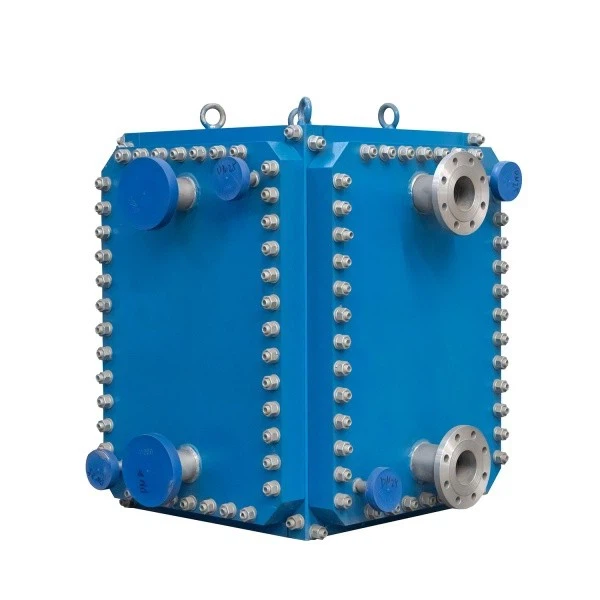
As a pressure vessel supplier, we offer a wide range of pressure vessels, including Asme Customerized Welded Plate Heat Exchanger, High Temperature Tube Preheater, and Tower Container. We understand the importance of using the right pressure gauges in our pressure vessels to ensure their safe and efficient operation.
We work closely with our customers to select the most suitable pressure gauges for their specific applications. Our experienced engineers can provide technical support and advice on pressure gauge selection, installation, and maintenance. We also offer a range of pressure gauges that are compatible with our pressure vessels, ensuring that our customers can get all the components they need from a single source.


Conclusion
Pressure gauges are essential components in pressure vessels, as they provide accurate pressure readings that are necessary for the safe and efficient operation of these vessels. There are several types of pressure gauges available, each with its own advantages and disadvantages. When selecting a pressure gauge for a pressure vessel, it is important to consider factors such as the pressure range, the type of fluid being measured, the accuracy requirements, the environmental conditions, and the cost.
As a pressure vessel supplier, we are committed to providing our customers with high-quality pressure vessels and pressure gauges that meet their specific needs. If you are in the market for a pressure vessel or need advice on pressure gauge selection, please do not hesitate to contact us for a purchase negotiation. We look forward to working with you to find the best solutions for your pressure vessel applications.
References
- "Pressure Gauge Handbook," Instrument Society of America.
- "Chemical Engineers' Handbook," Perry and Green.
- Manufacturers' technical documentation for Bourdon tube, diaphragm, bellows, digital, capsule, and differential pressure gauges.