


Alright, let’s cut to the chase—if you’re in the market for rigid pipe supports, you already know that a support that’s not welded right is basically a paperweight waiting to fail. As a supplier who’s worked on hundreds of projects (from industrial pipelines to chemical plants), I can’t stress enough how non-negotiable welding requirements are here. Rigid pipe supports aren’t just holding a pipe up—they’re taking the full weight of that line, handling thermal expansion, vibration, and even the occasional impact. Mess up the weld, and you’re looking at leaks, downtime, or worse. Let’s break down what you actually need to nail the welding for these bad boys.
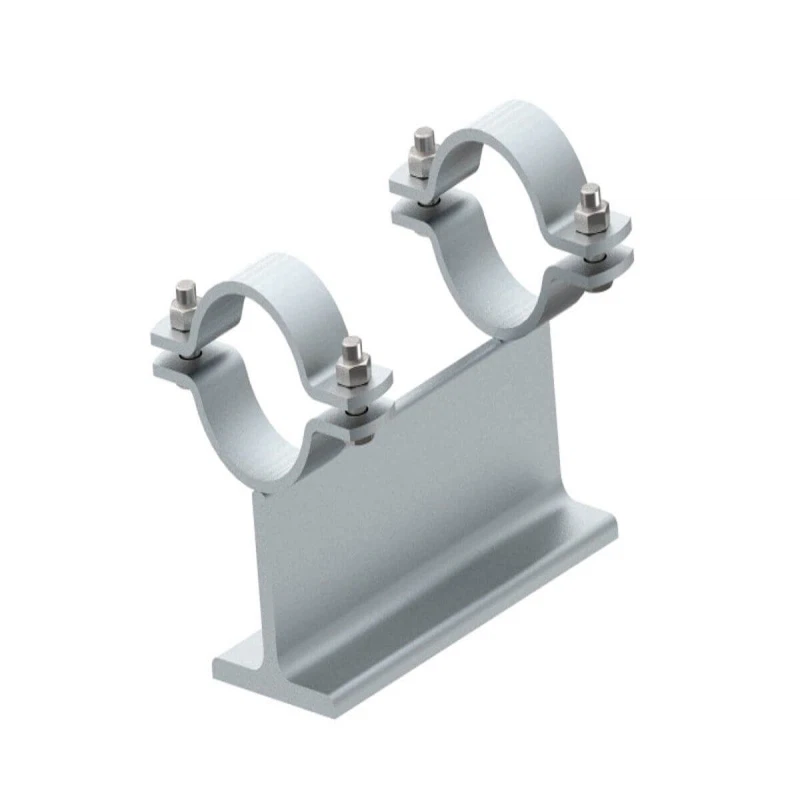
First off, let’s get one thing straight: rigid pipe supports come in all shapes, and the welding rules shift a little depending on which one you’re using. We sell a range, from basic Pipe Saddle Supports (/pipe-support/rigid-pipe-support/pipe-saddle-support.html) to specialized options, so let’s use these as examples to make it real. A pipe saddle’s entire job is wrapping around the bottom of the pipe, so its weld has to be strong enough to transfer that vertical load straight to the structure it’s mounted on. Then there’s the T-Type Pipe Support with Wear Pad (/pipe-support/rigid-pipe-support/t-type-pipe-support-with-wear-pad.html)—the wear pad is there to stop the pipe from scratching, but the weld holding that pad on? It’s under constant friction, so it can’t be sloppy. And don’t forget the T-Type Pipe Supports with Clamp (/pipe-support/rigid-pipe-support/t-type-pipe-supports-with-clamp.html)—the clamp secures the pipe, so the weld connecting the T-bar to the base plate has to handle both vertical weight and the side pressure from the clamp tightening.
Now, let’s get into the actual welding requirements, no jargon overload. First: material matching. This is rule number one, no exceptions. If your rigid support is made of carbon steel, you can’t just grab any old electrode. Using a 70S-6 electrode for carbon steel supports? That’s standard, but if you accidentally use stainless steel electrodes on a carbon steel saddle, you’ll get a weak, brittle weld that’ll crack under load. I’ve seen this happen on a refinery project once—sloppy electrode choice led to a saddle weld failing during a pressure test, cost them 2 days of downtime. Don’t be that guy. Check the spec sheet for your support (all ours have ‘em) and match the weld material exactly to the support’s base metal. If you’re dealing with exotic alloys (like for high-temperature pipelines), talk to your welding team—we can help, but don’t skip this step.
Next, joint preparation. How you cut the metal before welding is half the battle. For pipe saddles, the contact area between the saddle and the supporting structure (like a steel beam or wall flange) needs to be clean, flat, and properly beveled if the wall thickness is over 1/4 inch. If you just tack a saddle onto a rough, uneven surface, you’re only welding on 50% of the area, which means the weld can’t handle the full load. For T-Type supports, the base plate— that’s the part that bolts or welds to the structure—needs to have its edges ground down to remove any rust, oil, or mill scale. Mill scale is a killer; it traps impurities under the weld, causing porosity. One quick tip: use a wire wheel or grinder to prep the joint right before welding, not hours earlier. Dust and debris settle, and you don’t want that in your weld.
Tack welding is another thing people cut corners on. Tack welds are the small, temporary welds you make to hold the support in place while you do the final weld. Too small, and the support shifts—bad. Too big, and you have a harder time getting the final weld uniform. For our pipe saddles, we recommend 3-4 tack welds around the circumference, each about 1 inch long, spaced evenly. For T-Type supports, tack the T-bar to the center of the base plate first, then check that it’s square (use a square tool—don’t just eyeball it). If the T is off by even 2 degrees, the final weld will be stressed unevenly, and it’ll fail over time. I’ve had customers send back T-supports because they welded a crooked T, and that’s 100% on not doing proper tacks.

Now, the big one: final weld parameters. What’s the right amperage, voltage, travel speed? This depends on the metal thickness, but here’s the general playbook for our rigid supports (all of which have been tested for these specs):
- For thin supports (under 1/4 inch): Use a MIG wire with 0.035 inch diameter, amperage around 120-150. Too high, and you burn through the metal. Too low, and you get a weak, cold weld.
- For thicker supports (over 1/4 inch): MIG with 0.045 inch wire, amperage 180-220. If you’re doing a groove weld on a thick joint, you’ll need to do multiple passes—don’t try to do it in one. Each pass should be about 1/8 inch thick, and you need to clean the slag between passes (for stick welding, if that’s what you’re using) to prevent inclusions.
- Don’t forget interpass temperature. For supports that’ll be in high heat environments (like near furnace exhaust), you need to keep the weld from cooling too fast. Preheating the joint to 200-300°F with a torch prevents cracking, especially on carbon steel. We always mention this in the installation guide for our high-temp rigid supports, but some installers skip it. Big mistake.
Then there’s non-destructive testing (NDT). Do you need to x-ray every weld? Not always, but it depends on the application. For critical pipelines (like oil and gas, or high-pressure water), your engineer will likely require some level of NDT—magnetic particle testing for surface cracks, or ultrasonic testing for internal flaws. For low-stakes, low-pressure lines, a visual inspection plus a hammer test (tap the weld with a ball-peen hammer; if it sounds dull, it’s good, if it rings, there’s a void) might be enough. But if your project spec says NDT, don’t argue—do it. We’ve had a customer who skipped ultrasonic testing on a T-type support, and 6 months later, a hidden weld crack caused a pipe sag. They had to replace 20 supports, cost way more than testing would’ve.
Wait, let’s circle back to those specific supports we sell, because their welding needs are a little different. The Pipe Saddle Support—since it’s wrapping around the pipe, the weld on the pipe side (the part that touches the pipe) has to be smooth too, right? If the weld is uneven, it can rub against the pipe and cause wear, even if there’s a wear pad. Oh, and the gap between the saddle and the pipe should be less than 1/16 inch all around. If there’s a bigger gap, that means the saddle isn’t seating right, and the weld has to take extra load to make up for it. For the T-Type Pipe Support with Wear Pad: the wear pad is a separate piece, so its weld is fillet welds along the edges. Those fillets need to be at least 3/16 inch size (for a 1/4 inch thick pad), and you have to run the full length of the pad—don’t stop halfway, that’s where the pad will peel off. And the T-Type Pipe Supports with Clamp: the weld between the T-bar and the base plate needs to be a full penetration weld if the base plate is over 3/8 inch thick. Partial penetration leaves a weak line, and when the clamp tightens, that weld can split. We design all our supports to be weldable with standard equipment, but we do have custom specs if you need ‘em.
Another thing most people miss: post-weld inspection for distortion. Welding heats up metal, and it warps. For a pipe saddle, a warped edge means it won’t sit flat on the beam, so the weld is only taking load in spots. For a T-type support, a warped T-bar means the clamp won’t hold the pipe evenly, leading to side movement and vibration that wears out the weld faster. To prevent distortion, use back-step welding (weld 1 inch on one side, then jump to the opposite side) or clamp the support to the structure while welding. If it does warp, you can often hammer it back into shape gently, but it’s better to avoid it in the first place.
Now, let’s talk about what happens when you skip these steps. I’m not here to scare you, but I’ve seen the results. A customer in the food and beverage industry used a cheap, unqualified welder on our pipe saddles—tack welds too small, wrong electrode. Within a year, 3 saddles had split, causing a water leak that shut down their entire processing line. They had to replace the saddles, re-weld all the bad ones, and pay for cleaning up the leak. That cost them way more than if they’d hired a certified welder and followed the specs.
So, who does the welding? Certified welders, obviously. AWS (American Welding Society) certification is non-negotiable for any critical application. We always recommend that our customers use AWS D1.1 standard for structural welding, which covers all the requirements we’ve talked about. If your welder isn’t certified, don’t let them touch your rigid supports. Even small, non-critical supports can fail if welded by someone who doesn’t know what they’re doing.
At the end of the day, rigid pipe supports are only as good as their welds. Every step—material matching, joint prep, tack welding, final weld parameters, inspection—matters. We designed our Pipe Saddle Support, T-Type Pipe Support with Wear Pad, and T-Type Pipe Supports with Clamp to meet the strictest welding standards, and we include detailed guides for each one so you don’t have to guess. If you’re working on a project and you’re not sure about the welding requirements for your specific support, or you need help troubleshooting a weld issue, reach out. We’re a supplier first, so we’re here to help you get it right. Don’t wait until a weld fails—do it right the first time.
If you’re ready to lock in rigid pipe supports that meet all the welding and performance specs you need, let’s connect. We can walk you through our product line, answer any welding questions, and get you the right supports for your project.
REFERENCES
- American Welding Society. (2020). AWS D1.1: Structural Welding Code - Steel.
- Pipe Support Manufacturer Association. (2022). Rigid Pipe Support Design and Installation Guidelines.
- The Fabricator. (2021). Common Welding Mistakes in Structural Pipe Support Applications.
- National Association of Corrosion Engineers (NACE). (2020). Welding Requirements for Corrosion-Resistant Pipe Supports.


