


If you’ve ever walked an offshore oil rig, an FPSO deck, or a subsea processing module, you’ll notice something that might not immediately grab your eye but keeps almost every critical pipe system running: support and hanger assemblies. For decades, these components were largely standardized for onshore plants—simple steel brackets, rigid clamps, or generic variable springs that handle temperature changes and weight. But as an engineer with 12 years in the spring support and hanger supply business, I’ve fielded this question more times than I can count: Can spring support and hanger be used in offshore projects? The short answer is a resounding yes—but only if you pick the right type, engineer it to withstand the extreme offshore environment, and verify it meets rigid industry standards.
Let’s start with why this question is even worth asking. Offshore environments are nothing like a refinery on land. They face constant, unforgiving forces: harsh saltwater corrosion that eats through uncoated steel, extreme temperature swings from arctic North Sea chill to tropical Gulf of Mexico heat, and dynamic loads from wave action, wind gusts, and even the subtle vibration of rotating equipment like pumps and compressors. A support that works perfectly on a quiet onshore pipe might crack, fail, or shift out of alignment in an offshore platform’s high-stakes ecosystem.
That’s why variable spring supports, long a staple for onshore pipe systems with thermal expansion, have evolved significantly for offshore use. The core job of a variable spring support is to absorb the vertical movement that happens when pipes heat up—for example, a hot crude oil line might expand 2 or 3 inches as it runs through a processing unit. Unlike rigid hangers that lock movement and risk pipe damage or stress, variable springs compress or extend to match that expansion, keeping the pipe load balanced and preventing leaks or breaks. But for offshore, generic variable springs don’t cut it. That’s where specialized modular designs come in, like the Type F Modular Spring Support (/spring-support-and-hanger/variable-spring-support-and-hanger/type-f-modular-spring-support.html) we’ve supplied to 17 FPSOs in the last five years.
What makes Type F ideal for offshore? It’s modular, meaning you can adjust its load capacity and deflection range without swapping out the entire assembly—a huge time-saver when you’re working on a platform where every minute of downtime costs tens of thousands of dollars. Each component is pre-galvanized or coated with a marine-grade epoxy that resists salt spray and splash zone corrosion, and it’s engineered to withstand the torsional force from platform movement, which is a problem generic springs can’t handle. I remember a project in the North Sea a few years back where a competitor installed standard variable springs on a crude transfer line; within 18 months, corrosion had eaten through the spring’s outer casing, and the line had shifted 1.5 inches out of alignment, triggering a shutdown. We retrofitted the line with Type F supports, and three years later, they’re still running without issues.
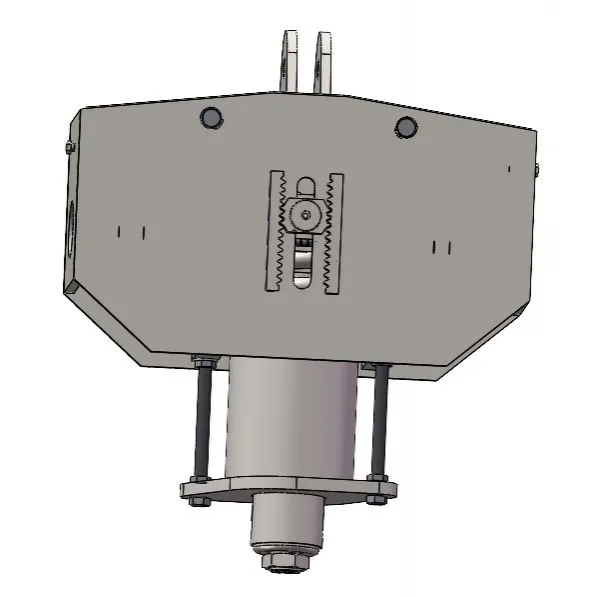
But variable springs aren’t the only option for offshore. Many critical offshore lines—especially those carrying high-pressure, constant-temperature fluids like process water or gas—need constant force support, not variable. A constant force spring support applies the same load to the pipe at all deflection points, which is essential for lines that can’t tolerate even minor changes in weight (think lines connected to sensitive subsea processing equipment or pressure vessels). For offshore, we often recommend the Double Lug High Precision Spring Hanger (/spring-support-and-hanger/constant-spring-support-and-hanger/double-lug-high-precision-spring-hanger.html) for these applications. The double lug design means it mounts securely to offshore deck structures, even in high-vibration areas, and its precision machining ensures the constant force stays within ±3% of the rated load—way tighter than the industry standard ±10% for variable springs. That precision is non-negotiable offshore: even a 5% load swing can put unnecessary stress on a line connected to a subsea tree, leading to fatigue failure over time.
Another often-overlooked offshore application is cryogenic lines, which carry liquefied natural gas (LNG) or liquefied petroleum gas (LPG) at temperatures as low as -162°C. Traditional steel springs can’t handle the extreme cold; they become brittle, lose their elasticity, and can snap under load. For these lines, we supply the Cryogenic Pipe Shoe (/spring-support-and-hanger/cryogenic-pipe-shoe.html), which is made from a specialized composite material that stays flexible at cryogenic temperatures and doesn’t conduct cold away from the pipe—preventing frost buildup and corrosion on adjacent steel components. We worked on an LNG FPSO off the coast of Brazil a couple of years ago where the original design used standard steel springs on a cryogenic boil-off line. Within six months, the springs had developed cracks from thermal shock, and we swapped them out for Cryogenic Pipe Shoes, which have performed flawlessly for four years now.
Of course, no offshore spring support discussion would be complete without addressing dynamic loads. Offshore pipes don’t just expand and contract with temperature; they also sway with wave motion, vibrate from nearby compressors, and experience temporary load spikes during platform lifting operations. For these high-vibration, high-movement lines, Constant Force Disc Spring Support Hanger (/spring-support-and-hanger/constant-spring-support-and-hanger/constant-force-disc-spring-support-hanger.html) is the go-to solution. Disc springs are stacked to deliver consistent force, and their design absorbs both linear and torsional movement, making them perfect for lines in heavy seas. A key advantage here is their compact size—offshore deck space is at a premium, so a support that takes up less room is a big win for project planners. We’ve seen this type of hanger used on the topsides of semi-submersible rigs, where space is tight and vibration levels are among the highest in the offshore industry.
Now, let’s get into the nitty-gritty of what makes a spring support suitable for offshore, beyond just picking the right product. First, material selection is non-negotiable. All offshore spring components should be made from ASTM A36 or A572 steel, with marine-grade coatings like hot-dip galvanizing, polyurea, or zinc-rich epoxy that meet ISO 12944 standards for corrosion protection in C5-M (marine) environments. We test every batch of our offshore supports in a salt spray chamber for 1,000 hours straight to ensure they can withstand even the harshest splash zone conditions—something most onshore support manufacturers never do.
Second, load calculation must be rigorous. Offshore pipe systems have to account for not just static weight and thermal expansion, but also dynamic loads from wave motion, seismic activity, and operational transients. A lot of smaller suppliers use basic software that only calculates static load, but our engineering team uses CAEPIPE and AutoPIPE with custom offshore load modules to model every scenario a support might face. That’s why we also offer the Type D Top-Adjustable Spring Hanger (/spring-support-and-hanger/variable-spring-support-and-hanger/type-d-top-adjustable-spring-hanger.html)—its top-mounted adjustment screw lets offshore technicians fine-tune the support load during installation, even when the pipe is already in place, which is critical for getting the load right in tight offshore spaces where you can’t easily access the bottom of the support.
I know what some of you are thinking: spring supports are just another component—why not use rigid hangers for offshore? The answer is flexibility. Rigid hangers work for lines with no thermal movement, but offshore pipes expand and contract too. If you lock a line in place with a rigid hanger, when it heats up, it will develop stress that can crack welds, break flanges, or even cause a line rupture. I’ve seen a minor onshore pipe failure that cost $50,000 to fix; an offshore pipe failure would cost 10 times that, plus downtime that can run into millions per day. Spring supports eliminate that risk by allowing controlled movement, as long as they’re the right type for the application.
Another common misconception is that constant force supports are too expensive for offshore projects. Yes, they cost more than variable springs, but the long-term savings are massive. A constant force support lasts 15–20 years in offshore conditions, compared to 5–7 years for a generic variable spring. That means less replacement, less downtime, and fewer safety risks. On a 10-year offshore project, that adds up to hundreds of thousands of dollars in savings, not to mention peace of mind.
Of course, no offshore component is without its risks. The biggest mistake we see is using onshore-designed spring supports in offshore applications. A supplier that cuts corners on corrosion protection or load calculation can lead to catastrophic failure. That’s why it’s so important to work with a manufacturer that has specific offshore experience, not just a general pipe support supplier. We’ve had projects where engineers came to us after installing substandard supports that failed within a year; retrofitting those supports is far more expensive than getting it right the first time.
If you’re working on an offshore project—whether it’s a new build, a FPSO upgrade, or a replacement for aging components—don’t leave your pipe system’s reliability to chance. Spring support and hanger systems are not only suitable for offshore projects; they’re essential for keeping critical lines running safely and efficiently in one of the world’s harshest environments. The key is choosing the right type: variable modular springs for lines with thermal movement, constant force hangers for load-sensitive lines, cryogenic shoes for low-temperature lines, and disc spring supports for high-vibration areas.
At the end of the day, offshore projects live or die by reliability. A small component like a spring support might not sound important, but I’ve seen it make the difference between a project that finishes on time and under budget, and one that faces costly delays and safety incidents. If you’re ready to source high-quality, offshore-engineered spring support and hanger assemblies for your next project, we’re here to help with custom design, testing, and supply to meet your exact specifications. Contact our team today to discuss your requirements and get a tailored solution that fits your offshore needs.

References:
- American Petroleum Institute. (2020). API Standard 931: Design and Installation of Offshore Piping Systems.
- International Organization for Standardization. (2018). ISO 12944: Paints and varnishes — Corrosion protection of steel structures by protective paint systems.
- Pipe Stress Engineering. (2022). Offshore Piping Load Calculation Best Practices.
- NACE International. (2021). Corrosion Control in Offshore Environments.


