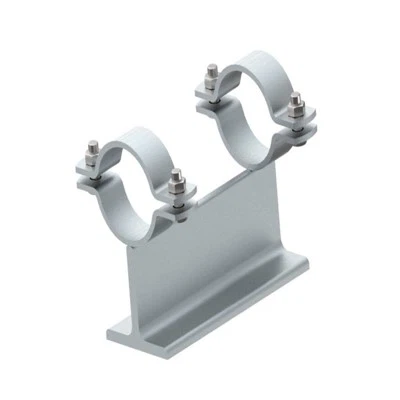
Cold pipe supports play a crucial role in various industrial applications, especially in systems dealing with low - temperature fluids. As a cold pipe support supplier, we understand the significance of ensuring that our products comply with international codes. This compliance not only guarantees the safety and reliability of the piping systems but also meets the expectations of our global customers.
Understanding International Codes for Cold Pipe Supports
International codes for cold pipe supports are developed to address a wide range of aspects, including design, material selection, installation, and maintenance. These codes are formulated by organizations such as the American Society of Mechanical Engineers (ASME), the International Organization for Standardization (ISO), and the European Committee for Standardization (CEN).
The ASME B31 series of codes, for example, provides comprehensive guidelines for the design and construction of pressure piping systems. When it comes to cold pipe supports, these codes specify requirements for factors like load - bearing capacity, thermal expansion and contraction, and corrosion resistance. ISO standards, on the other hand, focus on the quality management and performance requirements of products. They ensure that cold pipe supports are manufactured to a consistent level of quality across different regions.
Design Compliance
Design is the first step in ensuring that cold pipe supports comply with international codes. The design process must take into account the specific operating conditions of the piping system, such as the temperature range, fluid type, and pressure. For instance, in a cryogenic system where temperatures can drop to extremely low levels, the cold pipe supports need to be designed to withstand the associated thermal stresses.
One of the key design considerations is the selection of appropriate materials. International codes often specify the types of materials that can be used for cold pipe supports based on their mechanical properties and corrosion resistance. Stainless steel is a commonly used material for cold pipe supports due to its good strength and resistance to corrosion at low temperatures. However, the exact grade of stainless steel may vary depending on the specific requirements of the application.
Another important aspect of design compliance is the calculation of load - bearing capacity. Cold pipe supports must be able to support the weight of the pipe, the fluid inside it, and any additional loads such as wind or seismic forces. International codes provide formulas and methods for calculating these loads accurately. Our design team uses advanced software and engineering principles to ensure that our cold pipe supports meet or exceed the load - bearing requirements specified in the codes.
Material Compliance
Material compliance is closely related to design compliance. As mentioned earlier, international codes specify the acceptable materials for cold pipe supports. In addition to mechanical properties and corrosion resistance, the codes also address issues such as material traceability and certification.
We source our materials from reputable suppliers who can provide documentation proving the quality and origin of the materials. This documentation includes material test reports (MTRs) that detail the chemical composition and mechanical properties of the materials. By ensuring material traceability, we can guarantee that our cold pipe supports are made from the correct materials and meet the requirements of the international codes.


For example, if a code requires the use of a specific grade of carbon steel for a cold pipe support, we will only use that grade and verify its quality through MTRs. This not only ensures compliance but also enhances the overall reliability of our products.
Installation and Maintenance Compliance
Proper installation and maintenance are essential for the long - term compliance of cold pipe supports. International codes provide guidelines for the installation process, including the correct placement, alignment, and fastening of the supports. Incorrect installation can lead to premature failure of the cold pipe supports and compromise the safety of the piping system.
We provide detailed installation instructions to our customers, which are based on international codes and our own experience. Our installation guidelines cover aspects such as the use of appropriate tools, the torque values for bolts, and the proper handling of the cold pipe supports during installation.
Maintenance is also an important part of compliance. International codes often require regular inspections of cold pipe supports to check for signs of wear, corrosion, or damage. We offer maintenance services and recommendations to our customers to ensure that their cold pipe supports remain in good condition over time. Regular maintenance helps to identify and address any potential issues before they become major problems.
Types of Cold Pipe Supports and Compliance
There are several types of cold pipe supports, each with its own compliance requirements.
Sliding Cold Insulation Pipe Supports
Sliding Cold Insulation Pipe Supports are designed to allow the pipe to move freely in the axial direction while providing support. These supports need to comply with codes regarding friction coefficients, thermal insulation, and load - transfer mechanisms. The sliding mechanism must be designed to operate smoothly without causing excessive wear or damage to the pipe or the support itself. International codes specify the maximum allowable friction coefficients and the requirements for thermal insulation to prevent heat transfer between the pipe and the support.
Restraint Cold Pipe Support
Restraint Cold Pipe Support are used to restrict the movement of the pipe in certain directions. They are crucial for maintaining the stability of the piping system, especially in areas where there are high - pressure or high - temperature differentials. Compliance for restraint cold pipe supports involves ensuring that they can withstand the forces acting on them without failure. The design and installation of these supports must follow the guidelines in international codes to ensure proper restraint and prevent excessive movement of the pipe.
Guided Cold Insulation Pipe Support
Guided Cold Insulation Pipe Support are designed to guide the pipe's movement in a specific direction while providing support and insulation. These supports need to comply with codes regarding the alignment accuracy, thermal performance, and load - distribution. The guiding mechanism must be designed to allow for smooth movement of the pipe while maintaining the correct alignment. International codes specify the tolerances for alignment and the requirements for thermal insulation to ensure efficient operation of the piping system.
Quality Control and Testing
To ensure that our cold pipe supports comply with international codes, we have a rigorous quality control and testing process in place. Our quality control team conducts inspections at every stage of the manufacturing process, from raw material inspection to final product testing.
We perform various tests on our cold pipe supports, including load - testing, material testing, and thermal performance testing. Load - testing is used to verify the load - bearing capacity of the supports, while material testing ensures that the materials meet the specified chemical and mechanical properties. Thermal performance testing is crucial for cold pipe supports as it measures the insulation effectiveness and the ability of the supports to withstand thermal stresses.
All our testing procedures are based on international standards and codes. We maintain detailed records of all tests and inspections, which can be provided to our customers upon request. This transparency helps to build trust and confidence in our products.
Conclusion
As a cold pipe support supplier, compliance with international codes is at the core of our business. Through proper design, material selection, installation, and maintenance, we ensure that our cold pipe supports meet the highest standards of quality and safety. Our commitment to compliance not only benefits our customers but also contributes to the overall reliability of the industrial piping systems.
If you are in the market for high - quality cold pipe supports that comply with international codes, we invite you to contact us for a detailed discussion. Our team of experts can provide you with customized solutions based on your specific requirements. Let's work together to ensure the success of your piping project.
References
- American Society of Mechanical Engineers (ASME). B31 series of codes.
- International Organization for Standardization (ISO). Relevant ISO standards for pressure piping and pipe supports.
- European Committee for Standardization (CEN). Standards related to cold pipe supports in the European context.