Dampers are essential components in various industries, playing a crucial role in controlling motion, reducing vibrations, and ensuring the stability and safety of systems. As a damper supplier, I've had the privilege of witnessing firsthand how these remarkable devices work and their impact on different applications. In this blog, I'll delve into the inner workings of dampers, exploring the different types and how they function to meet specific needs.
Basic Principles of Dampers
At its core, a damper is a device that dissipates energy to control motion. When a system experiences a force or movement, the damper converts the kinetic energy of that motion into heat energy, which is then dissipated into the surrounding environment. This process effectively reduces the amplitude of vibrations and controls the speed of movement, preventing excessive oscillations and ensuring the smooth operation of the system.
The most common type of damper used in many applications is the viscous damper, which relies on the resistance of a fluid to flow. Viscous dampers typically consist of a piston that moves within a cylinder filled with a viscous fluid, such as oil. As the piston moves, the fluid is forced through small orifices or channels, creating resistance and dissipating energy. The amount of damping force generated by a viscous damper depends on several factors, including the viscosity of the fluid, the size and shape of the orifices, and the speed of the piston.
Types of Dampers and Their Working Mechanisms
Hydraulic Dampers
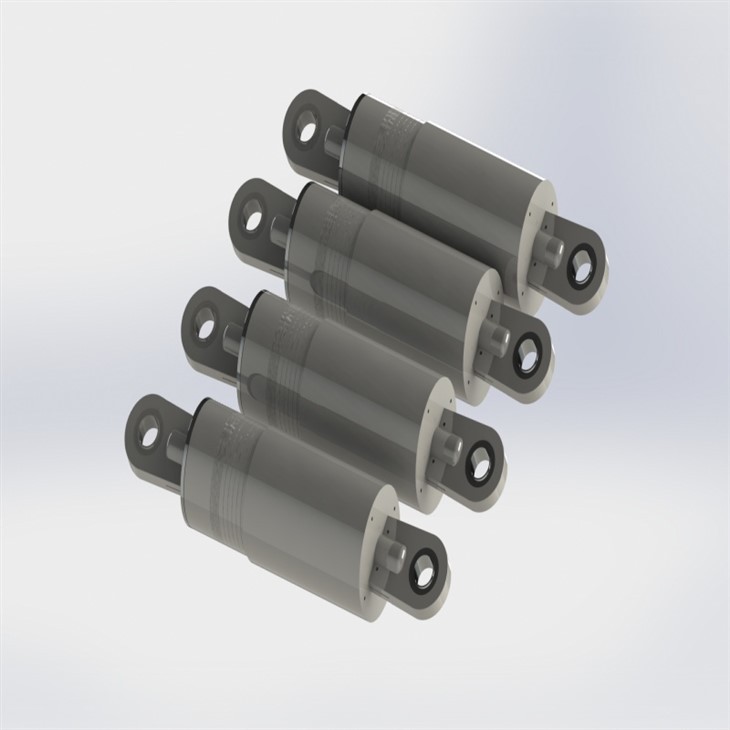
Hydraulic Damper are a type of viscous damper that uses hydraulic fluid to provide damping. These dampers are widely used in automotive, aerospace, and industrial applications due to their high damping capacity and ability to handle large forces. A hydraulic damper typically consists of a cylinder, a piston, and a hydraulic fluid. The piston divides the cylinder into two chambers, and the hydraulic fluid flows between these chambers through small orifices or valves.
When the damper is subjected to a force, the piston moves within the cylinder, forcing the hydraulic fluid to flow through the orifices. The resistance to the fluid flow creates a damping force that opposes the motion of the piston. The damping force can be adjusted by changing the size of the orifices or the viscosity of the hydraulic fluid. Hydraulic dampers are known for their ability to provide consistent damping over a wide range of operating conditions, making them ideal for applications where precise control of motion is required.
Mechanical Dampers
Mechanical dampers use mechanical elements, such as springs, friction pads, or dashpots, to provide damping. One common type of mechanical damper is the friction damper, which uses friction between two surfaces to dissipate energy. Friction dampers are often used in building structures to reduce the effects of earthquakes and wind loads. When the structure experiences a lateral force, the friction damper resists the movement by generating a frictional force, which dissipates the energy of the vibration.
Another type of mechanical damper is the spring damper, which combines the elastic properties of a spring with the damping characteristics of a viscous or friction element. Spring dampers are commonly used in automotive suspension systems to provide a smooth ride by absorbing shocks and vibrations from the road surface. When the vehicle encounters a bump, the spring compresses, storing energy, and the damping element dissipates the energy as heat, preventing the spring from oscillating excessively.
Magnetic Dampers
Magnetic dampers use magnetic fields to provide damping. These dampers are often used in high - precision applications, such as in optical instruments and aerospace equipment. A magnetic damper typically consists of a magnet and a conductive material, such as a copper or aluminum plate. When the conductive material moves relative to the magnet, eddy currents are induced in the material, creating a magnetic field that opposes the motion. The interaction between the induced magnetic field and the external magnetic field generates a damping force that dissipates the energy of the motion.
Applications of Dampers
Dampers are used in a wide variety of applications across different industries. In the automotive industry, dampers are an integral part of the suspension system, providing a comfortable ride by reducing the impact of bumps and vibrations on the vehicle. They also help to improve the handling and stability of the vehicle by controlling the movement of the wheels.
In the aerospace industry, dampers are used to reduce vibrations in aircraft structures, such as wings and fuselages. These vibrations can be caused by aerodynamic forces, engine vibrations, or turbulence. By dissipating the energy of these vibrations, dampers help to prevent structural damage and ensure the safety and comfort of passengers and crew.
In the construction industry, dampers are used in building structures to enhance their seismic resistance. During an earthquake, the movement of the ground can cause the building to vibrate, potentially leading to structural failure. Dampers, such as viscous or friction dampers, can be installed in the building to absorb and dissipate the energy of the seismic waves, reducing the stress on the structure and minimizing the risk of damage.
Factors Affecting Damper Performance
Several factors can affect the performance of a damper. The viscosity of the fluid in a viscous damper is a critical factor, as it determines the amount of resistance to fluid flow and, therefore, the damping force. Higher viscosity fluids generally provide greater damping, but they may also be more sensitive to temperature changes.
The size and shape of the orifices or channels in a damper also play an important role. Smaller orifices create more resistance to fluid flow, resulting in higher damping forces. However, if the orifices are too small, they may become clogged, reducing the effectiveness of the damper.
The speed of the piston or the moving element in the damper is another factor that affects performance. In general, the damping force increases with the speed of the moving element, but this relationship may not be linear. Some dampers are designed to provide different levels of damping depending on the speed of the motion, allowing for more precise control of the system.
Importance of Choosing the Right Damper
Selecting the right damper for a specific application is crucial to ensure optimal performance. Different applications have different requirements in terms of damping force, response time, and durability. For example, a damper used in a high - speed machinery application may require a high damping capacity and a fast response time, while a damper used in a building structure may need to be able to withstand long - term loads and environmental conditions.
As a damper supplier, we work closely with our customers to understand their specific needs and recommend the most suitable damper for their application. We offer a wide range of dampers, including hydraulic, mechanical, and magnetic dampers, each designed to meet different requirements. Our team of experts can provide technical support and assistance in the selection, installation, and maintenance of dampers, ensuring that our customers get the best performance from their systems.
Contact Us for Your Damper Needs
If you're in need of dampers for your application, whether it's for automotive, aerospace, construction, or any other industry, we're here to help. Our extensive range of high - quality dampers is designed to provide reliable performance and meet the most demanding requirements. Contact us today to discuss your damper needs and start a procurement negotiation. We look forward to working with you to find the perfect damper solution for your project.
References
- "Dynamics of Structures" by Anil K. Chopra.
- "Handbook of Vibration Damping" edited by Colin M. Harris.
- "Automotive Suspension Design and Analysis" by David Crolla.