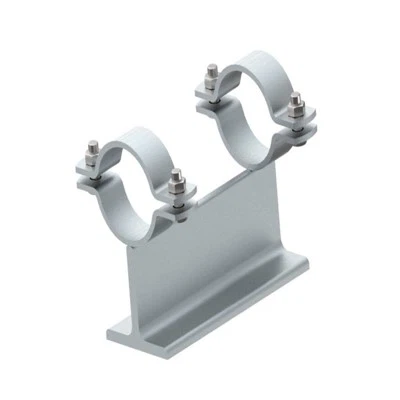
The bending moment of a pipe is a crucial factor that significantly influences the design of a pipe saddle support. As a supplier of Pipe Saddle Support, I have witnessed firsthand how understanding and accounting for this bending moment can make or break the effectiveness and safety of a piping system. In this blog, I will delve into the relationship between a pipe's bending moment and the design of pipe saddle supports, highlighting key considerations and best practices.
Understanding Bending Moment in Pipes
Before exploring its impact on pipe saddle support design, it's essential to understand what bending moment is. A bending moment is a measure of the internal forces within a pipe that cause it to bend. This occurs due to various factors, such as the weight of the fluid inside the pipe, external loads like wind or seismic activity, and thermal expansion or contraction.
When a pipe is subjected to these forces, it experiences a distribution of stresses across its cross - section. The bending moment is maximum at the points where the pipe is most likely to bend, and it can lead to deformation, fatigue, and even failure if not properly managed. For example, in a long - span pipeline, the self - weight of the pipe and the fluid it carries can create significant bending moments at the mid - span and support points.
Impact on Pipe Saddle Support Design
Load Capacity
The bending moment directly affects the load - bearing capacity required of a pipe saddle support. A high bending moment means that the support must be able to withstand greater forces to prevent the pipe from excessive deflection or failure. When designing a Pipe Saddle Support, engineers need to calculate the maximum bending moment the pipe will experience under various operating conditions. This includes normal operating loads, as well as extreme conditions such as start - up, shutdown, or emergency situations.

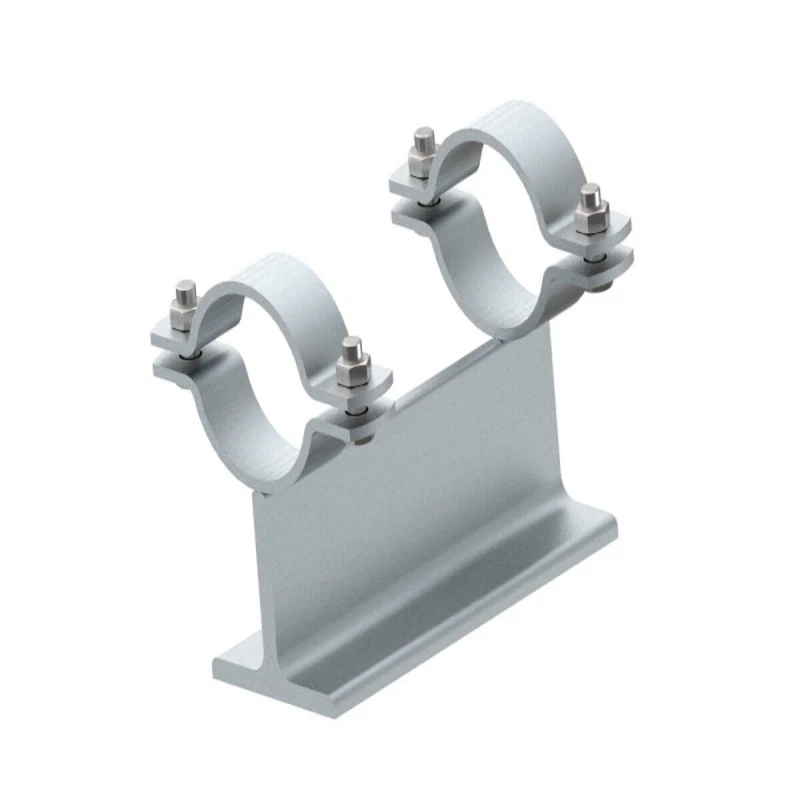
For instance, if a pipe is carrying a high - density fluid or is located in an area prone to strong winds, the bending moment will be higher. In such cases, the pipe saddle support needs to be designed with a larger cross - sectional area and stronger materials to handle the increased load. Our Pipe Saddle Support products are engineered to meet a wide range of load requirements, ensuring reliable support for pipes under different bending moment scenarios.
Support Location
The location of pipe saddle supports is also determined by the bending moment distribution along the pipe. Supports are typically placed at points where the bending moment is relatively low to minimize stress concentrations. By strategically positioning the supports, the overall bending moment in the pipe can be reduced.
For example, in a simply - supported pipe, the maximum bending moment occurs at the mid - span. Placing additional supports closer to the mid - span can effectively reduce this bending moment. However, this also requires careful consideration of the pipe's flexibility and the potential for thermal expansion. Our team of experts can assist in determining the optimal support locations based on the specific bending moment characteristics of your piping system.
Support Type and Configuration
The bending moment influences the choice of support type and configuration. Different types of pipe supports, such as T - Type Pipe Support with Wear Pad and T - Type Pipe Supports with Clamp, have different capabilities to resist bending moments.
Rigid supports are often used when the bending moment is relatively small and the pipe needs to be held firmly in place. They provide high - stiffness support and prevent excessive movement. On the other hand, flexible supports may be more suitable for pipes with large thermal expansion or where the bending moment varies significantly. These supports can accommodate some movement while still providing adequate support.
Design Considerations for Pipe Saddle Supports under Bending Moments
Material Selection
The material of the pipe saddle support must be carefully selected to withstand the forces generated by the bending moment. Common materials include carbon steel, stainless steel, and alloy steel. Carbon steel is a cost - effective option for general applications, while stainless steel is preferred in corrosive environments. Alloy steel may be used when high strength is required to handle large bending moments.
The material's mechanical properties, such as yield strength, ultimate strength, and modulus of elasticity, play a crucial role in the support's ability to resist bending. For example, a support made of a material with high yield strength can withstand higher stresses without permanent deformation.
Structural Design
The structural design of the pipe saddle support is optimized to distribute the load evenly and reduce stress concentrations. Features such as fillets, reinforcements, and proper welding techniques are used to enhance the support's strength and durability.
For example, adding fillets at the corners of the support can reduce stress concentrations, which are more likely to occur in sharp - edged designs. Reinforcements can be added to areas where the bending moment is highest to increase the support's load - carrying capacity.
Thermal Expansion and Contraction
Thermal expansion and contraction can significantly affect the bending moment in a pipe. As the pipe heats up or cools down, it expands or contracts, which can create additional bending moments if the movement is restricted. Pipe saddle supports need to be designed to accommodate this thermal movement.
This can be achieved through the use of sliding or rolling elements in the support design. These elements allow the pipe to move freely in the axial direction, reducing the bending moment caused by thermal expansion. Our pipe saddle supports are designed with these considerations in mind, ensuring that they can adapt to thermal changes in the piping system.
Case Studies
Industrial Pipeline Project
In an industrial pipeline project, a large - diameter pipe was carrying a high - temperature fluid. The initial design did not adequately account for the bending moment caused by thermal expansion. As a result, the pipe experienced excessive deflection and stress concentrations at the support points, leading to premature failure of some of the supports.
After a detailed analysis, our team recommended the installation of T - Type Pipe Supports with Clamp with sliding elements. These supports were designed to accommodate the thermal movement of the pipe while still providing sufficient support against the bending moment. The new design effectively reduced the bending moment in the pipe and eliminated the deflection issues, ensuring the long - term reliability of the pipeline.
Offshore Platform Pipeline
In an offshore platform pipeline, the pipes were subjected to significant bending moments due to wave and wind loads. The original pipe saddle supports were not designed to handle these dynamic loads, resulting in fatigue cracking and corrosion at the support - pipe interface.
We provided a custom - designed Pipe Saddle Support solution. The supports were made of high - strength alloy steel and had a unique configuration to distribute the load evenly. Additionally, they were coated with a corrosion - resistant material to protect against the harsh marine environment. This solution successfully improved the performance of the pipeline and extended the service life of the supports.
Conclusion
The bending moment of a pipe has a profound impact on the design of a pipe saddle support. From load capacity and support location to material selection and structural design, every aspect of the support design must be carefully considered to ensure the safe and efficient operation of the piping system.
As a leading supplier of Pipe Saddle Support, we have the expertise and experience to provide high - quality support solutions tailored to your specific needs. Whether you are dealing with high - bending - moment applications or need support for pipes in challenging environments, our team of engineers can work with you to design the most suitable pipe saddle supports.
If you are interested in learning more about our products or need assistance with your pipe support design, please do not hesitate to contact us. We look forward to discussing your project and providing you with the best pipe saddle support solutions.
References
- "Pipe Stress Engineering Handbook" by Liang - Chi Liu.
- "Design of Piping Systems" by Mohinder L. Nayyar.
- ASME B31.3 Process Piping Code.