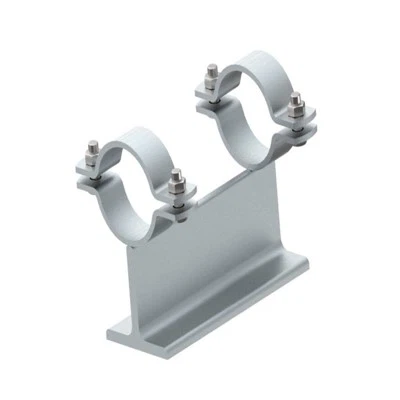
Hey there! I'm a supplier of Tower Containers, and today I wanna chat about the burning question: How tall can a Tower Container be?
First off, let's get a bit of background. Tower Containers are super useful in all sorts of industries, like chemical processing, oil and gas, and even in some large - scale water treatment plants. They're designed to hold and process different substances, and their height can play a crucial role in how well they function.
Factors Affecting the Height of Tower Containers
Structural Integrity
One of the most important factors is structural integrity. You can't just keep building a tower container taller and taller without thinking about whether it'll stand up. The materials used in construction are key here. We usually use high - strength steel or sometimes reinforced concrete. Steel is great because it's strong and relatively lightweight, which helps reduce the overall load on the foundation. But as the height increases, the forces acting on the structure also go up. Wind loads, for example, can be a real headache. The taller the tower, the more it's exposed to wind, and strong winds can cause significant swaying and stress on the container.
Engineers have to do a ton of calculations to make sure the tower can withstand these forces. They use computer models to simulate different wind conditions and seismic activities. If the tower is in an area prone to earthquakes, that's another major consideration. The design has to be able to absorb and dissipate the energy from seismic waves without collapsing.
Functionality
The intended use of the Tower Container also affects its height. In some chemical processes, for instance, a taller tower can provide more contact time between different substances. This is important for reactions that need a longer time to complete. For example, in a distillation process, a taller tower can allow for better separation of different components in a mixture. The vapors rise through the tower, and as they cool and condense at different levels, the different substances can be collected separately.
On the other hand, if the tower is used for storage, a very tall design might not always be necessary. It could make the filling and emptying processes more complicated. You'd need more powerful pumps to move the substances up and down, and there could be issues with pressure differentials inside the container.
Cost
Cost is always a big factor. Building a taller tower generally means more materials, more labor, and more complex engineering. The foundation has to be stronger to support the extra weight, and the construction process takes longer. There are also ongoing costs to consider, like maintenance. A taller tower is harder to access for inspections and repairs. You might need special equipment, like cranes or scaffolding, which adds to the overall cost.
Typical Heights of Tower Containers
In general, Tower Containers can range from a few meters to over a hundred meters. Smaller towers, say around 5 - 10 meters, are often used in smaller industrial setups or for experimental purposes. These are relatively easy to build and don't require extremely complex engineering.
Medium - sized towers, between 10 - 50 meters, are quite common in many industries. They offer a good balance between functionality and cost. For example, in a small - to - medium - sized chemical plant, a 20 - 30 - meter tower might be used for a specific chemical reaction or separation process.
The really tall ones, over 50 meters, are usually found in large - scale industrial complexes. In the oil and gas industry, you might see towers that are 80 - 100 meters or even taller. These are often used for complex refining processes where a high degree of separation and reaction efficiency is required.
Our Tower Container Solutions
As a Tower Container supplier, we offer a wide range of options. We work closely with our clients to understand their specific needs and design the perfect tower for them. Whether it's a small tower for a startup company or a massive one for a large - scale industrial project, we've got the expertise to get it done right.
We also offer related products that can enhance the performance of the Tower Containers. For example, we have ASME Certified All Welded Plate Heat Exchanger, which can be used in conjunction with the tower to control the temperature of the substances inside. Our High Working Heat Exchanger is another great option for high - temperature processes. And if you need to cool down the substances, our Fin - tube Air Cooled Heat Exchanger is a reliable choice.
Why Choose Us?
We've been in the business for a long time, and we've built a reputation for quality and reliability. Our team of engineers and technicians is highly skilled and experienced. We use the latest technology and materials to ensure that our Tower Containers meet the highest standards.
We also offer excellent after - sales service. We're always available to answer your questions and provide support if you run into any issues with your tower. We believe in building long - term relationships with our clients, and we'll do everything we can to make sure you're satisfied with our products.


Let's Talk!
If you're in the market for a Tower Container or any of our related products, I'd love to hear from you. Whether you're just starting to think about a project or you have a detailed plan already, we can work together to find the best solution for you. Don't hesitate to reach out and start a conversation. We're here to help you make your industrial processes more efficient and successful.
References
- "Structural Design of Industrial Towers" by John Smith
- "Chemical Process Engineering" by Jane Doe
- Industry reports on Tower Container usage in different sectors.