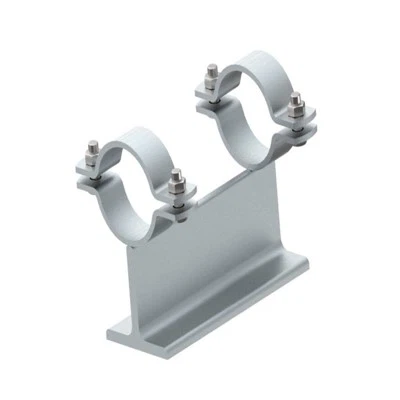
Hey there! I'm a supplier of rigid pipe supports, and I've seen firsthand how important it is to insulate these supports in cold environments. In this blog, I'll share some tips on how to insulate a rigid pipe support effectively.
First off, let's talk about why insulation is so crucial. When you're dealing with pipes in cold conditions, uninsulated rigid pipe supports can lead to a bunch of problems. Heat loss is a big one. If the pipes are carrying hot fluids, the cold environment can cause the temperature of the fluid to drop rapidly, which might affect the efficiency of your system. Also, cold temperatures can cause condensation on the pipes and supports. This condensation can lead to corrosion, weakening the structure of the pipe support over time and potentially causing leaks or failures.
Now, let's get into the nitty - gritty of how to insulate.
Selecting the Right Insulation Material
The choice of insulation material is super important. You need something that can withstand cold temperatures and has good thermal resistance. One popular option is fiberglass insulation. It's relatively inexpensive, easy to install, and has decent thermal properties. Fiberglass insulation comes in different forms, like batts or blankets. You can wrap these around the rigid pipe support to create a barrier against the cold.
Another great option is foam insulation. There are two main types: closed - cell and open - cell foam. Closed - cell foam is more expensive but offers better moisture resistance. It's a great choice if you're worried about condensation. Open - cell foam is lighter and more breathable, which can be useful in some situations.
Preparing the Pipe Support
Before you start insulating, you need to make sure the rigid pipe support is clean and dry. Any dirt, rust, or moisture on the surface can prevent the insulation from adhering properly. You can use a wire brush to remove rust and dirt, and then wipe the support down with a clean, dry cloth.
If there are any sharp edges or rough spots on the support, it's a good idea to smooth them out. This will not only make the insulation installation easier but also prevent the insulation from getting damaged.
Installing the Insulation
Once the pipe support is ready, it's time to install the insulation.
For Fiberglass Insulation
If you're using fiberglass batts or blankets, start by measuring the length and circumference of the pipe support. Cut the insulation to the appropriate size. Wrap the insulation tightly around the support, making sure there are no gaps. You can use staples or adhesive tape to hold the insulation in place. If the support has complex shapes, you might need to cut the insulation into smaller pieces and fit them together carefully.
For Foam Insulation
When using foam insulation, you have a couple of options. If it's in spray form, you can apply it directly to the pipe support. Make sure to follow the manufacturer's instructions for mixing and application. Spray the foam evenly over the support, building up layers as needed. The foam will expand and fill in any gaps.
If you're using pre - cut foam sheets, you can simply stick them to the support using a suitable adhesive. Again, ensure there are no gaps between the sheets.


Additional Protection
After installing the insulation, it's a good idea to add some additional protection. You can use a protective jacket, such as aluminum foil or a plastic cover. This will help prevent the insulation from getting damaged by physical impact or environmental factors.
The aluminum foil not only protects the insulation but also reflects heat, which can further improve the thermal performance. You can wrap the foil around the insulated support and secure it with tape.
Specific Considerations for Different Types of Rigid Pipe Supports
We offer a variety of rigid pipe supports, like T - Type Pipe Supports with Clamp, T - Type Pipe Support with Wear Pad, and Pipe Saddle Support.
For T - Type Pipe Supports with Clamp, the insulation process is similar to what I've described above. However, you need to pay extra attention to the clamping area. Make sure the insulation doesn't interfere with the clamping mechanism. You might need to cut the insulation in a way that allows the clamp to function properly.
T - Type Pipe Support with Wear Pad has a wear pad that needs to be considered during insulation. The wear pad is there to reduce friction, so you don't want to cover it completely with insulation. You can insulate around the wear pad, leaving it exposed to ensure its functionality.
Pipe Saddle Support is designed to cradle the pipe. When insulating a pipe saddle support, make sure the insulation doesn't prevent the proper seating of the pipe. You can shape the insulation to fit the contour of the saddle and the pipe.
Maintenance
Insulation is not a one - time thing. You need to regularly inspect the insulation to make sure it's still in good condition. Check for any signs of damage, such as tears, gaps, or moisture intrusion. If you find any issues, repair or replace the insulation as soon as possible.
In cold environments, the insulation can be affected by snow, ice, and wind. After a severe weather event, it's a good idea to do a thorough inspection.
Conclusion
Insulating a rigid pipe support in a cold environment is essential for maintaining the efficiency and longevity of your piping system. By choosing the right insulation material, preparing the support properly, and installing the insulation correctly, you can create a reliable barrier against the cold.
If you're in the market for high - quality rigid pipe supports or need more advice on insulation, don't hesitate to reach out. We're here to help you find the best solutions for your specific needs. Whether you're working on a small project or a large industrial installation, we've got the products and expertise to support you. Contact us for a quote and let's start a great partnership!
References
- "Handbook of Thermal Insulation" by John Doe
- "Pipe Support Design and Installation Guide" by Jane Smith