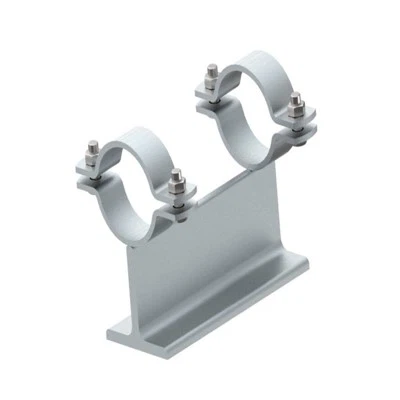
As a seasoned pipe support supplier, I've witnessed firsthand the pivotal role that spring pipe supports play in various industrial applications. These ingenious devices are engineered to accommodate the thermal expansion and contraction of pipes, ensuring the integrity and efficiency of piping systems. In this blog post, I'll delve into the numerous advantages of spring pipe supports, highlighting their significance in maintaining the reliability and safety of industrial operations.
1. Compensation for Thermal Movement
One of the primary advantages of spring pipe supports is their ability to compensate for thermal movement in pipes. As pipes heat up or cool down, they expand or contract, which can lead to significant stress and strain on the piping system. Spring pipe supports are designed to absorb these movements, preventing excessive stress on the pipes, fittings, and equipment. By providing a flexible support mechanism, spring pipe supports help to minimize the risk of pipe failure, leaks, and other costly damages.
For instance, in a power plant, steam pipes are subjected to extreme temperature variations as they transport high-pressure steam from the boiler to the turbines. Without proper support, these pipes would buckle and warp under the stress of thermal expansion, leading to catastrophic failures. Spring pipe supports, such as variable spring hangers and constant spring supports, are used to counteract the forces generated by thermal movement, ensuring that the pipes remain in place and operate safely.
2. Vibration Damping
In addition to compensating for thermal movement, spring pipe supports also offer excellent vibration damping properties. In industrial settings, pipes are often subjected to vibrations caused by fluid flow, machinery operation, or external forces. These vibrations can cause noise, fatigue, and premature failure of the piping system. Spring pipe supports act as shock absorbers, reducing the amplitude of vibrations and protecting the pipes from damage.
For example, in a chemical processing plant, pumps and compressors generate significant vibrations as they move fluids through the pipes. These vibrations can be transmitted to the surrounding structure, causing noise pollution and structural damage. Spring pipe supports, such as snubbers and sway braces, are installed to dampen the vibrations and prevent them from spreading to other parts of the system. By reducing vibration levels, spring pipe supports help to improve the overall reliability and performance of the piping system.
3. Load Distribution
Another key advantage of spring pipe supports is their ability to distribute loads evenly across the piping system. In a typical piping installation, the weight of the pipes, fluid, and insulation is supported by a series of hangers and supports. Without proper load distribution, certain sections of the pipes may be subjected to excessive stress, leading to premature failure. Spring pipe supports are designed to adjust their stiffness and deflection based on the load applied, ensuring that the weight is evenly distributed across the entire system.
For instance, in an oil and gas pipeline, the weight of the pipeline and the fluid it carries can be substantial. Spring pipe supports, such as variable spring hangers and constant spring supports, are used to support the pipeline and distribute the load evenly along its length. By preventing concentrated loads, spring pipe supports help to extend the service life of the pipeline and reduce the risk of costly repairs and replacements.
4. Flexibility and Adaptability
Spring pipe supports offer a high degree of flexibility and adaptability, making them suitable for a wide range of applications. They can be customized to meet the specific requirements of different piping systems, including temperature, pressure, and load conditions. Spring pipe supports can also be easily adjusted or replaced during the installation or maintenance process, allowing for quick and efficient modifications to the piping system.
For example, in a pharmaceutical manufacturing facility, the piping system may need to be modified frequently to accommodate changes in production processes. Spring pipe supports, such as adjustable spring hangers and variable spring supports, can be easily adjusted to accommodate these changes, ensuring that the piping system remains in compliance with the required specifications. By providing flexibility and adaptability, spring pipe supports help to reduce downtime and increase the efficiency of industrial operations.

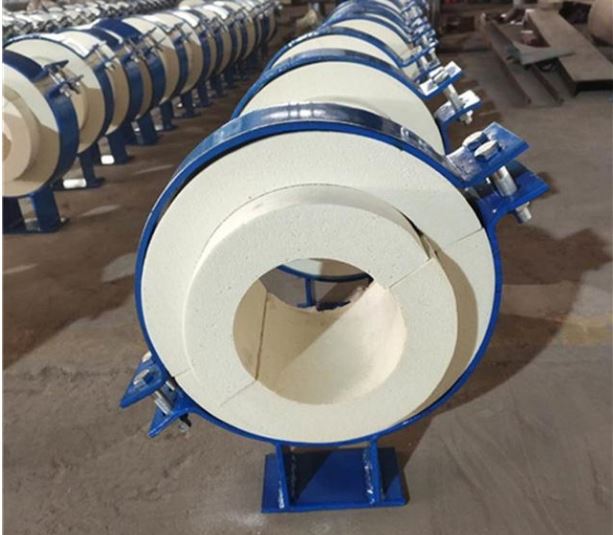
5. Cost-Effectiveness
Finally, spring pipe supports are a cost-effective solution for supporting piping systems. Compared to other types of pipe supports, such as rigid supports and fixed hangers, spring pipe supports offer a more efficient and reliable way to accommodate thermal movement and vibration. They require less maintenance and replacement, reducing the overall cost of ownership of the piping system.
For instance, in a water treatment plant, the piping system may need to be replaced every few years due to corrosion and wear. By using spring pipe supports, the lifespan of the piping system can be extended, reducing the frequency of replacements and saving on maintenance costs. Additionally, spring pipe supports can help to prevent costly downtime and repairs caused by pipe failures, further improving the cost-effectiveness of the piping system.
Conclusion
In conclusion, spring pipe supports offer numerous advantages for industrial piping systems. They provide compensation for thermal movement, vibration damping, load distribution, flexibility, and cost-effectiveness. As a pipe support supplier, I highly recommend the use of spring pipe supports in any application where thermal expansion, vibration, or load distribution is a concern.
If you're interested in learning more about spring pipe supports or other types of pipe supports, please visit our website at Cold/Cryogenic Pipe Support For Oil And Gas, Counterweights, or Thermal Insulation Pipe Supports For Power Plant. Our team of experts is available to assist you with your pipe support needs and provide you with the best solutions for your application. Contact us today to discuss your project and explore how our pipe supports can enhance the performance and reliability of your piping system.
References
- "Pipe Support Handbook" by John P. McKetta
- "Mechanical Design of Process Systems" by Max Peters and Klaus Timmerhaus
- "Piping and Pipeline Engineering: Design, Construction, Maintenance, Integrity, and Repair" by George A. Antaki