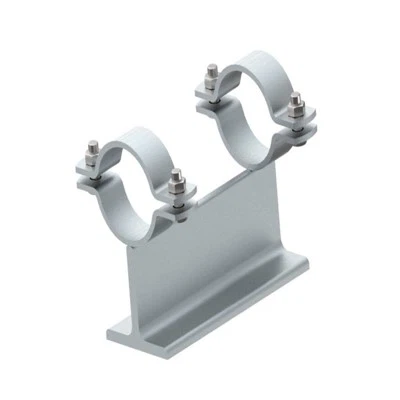
Pipe saddle supports are crucial components in various industrial piping systems, providing essential support and stability to pipes. As a Pipe Saddle Support supplier, I have witnessed firsthand the diverse range of applications and requirements for these supports. In this blog, I will explore the different types of pipe saddle supports, their features, and applications.
Rigid Pipe Saddle Supports
Rigid pipe saddle supports are the most common type of pipe supports. They are designed to provide a fixed point of support for pipes, preventing movement and vibration. These supports are typically made of steel or other high-strength materials and are suitable for applications where the pipe needs to be held in a specific position.
One of the key features of rigid pipe saddle supports is their ability to withstand high loads. They are often used in heavy industrial applications, such as oil and gas refineries, power plants, and chemical processing plants. The rigid structure of these supports ensures that the pipe remains stable even under extreme conditions.
Rigid pipe saddle supports can be further classified into different subtypes based on their design and application. For example, there are simple pipe saddles that provide basic support for the pipe, and there are also more complex designs that include features such as insulation or corrosion protection. To learn more about our Pipe Saddle Support, you can visit our website.
Spring-loaded Pipe Saddle Supports
Spring-loaded pipe saddle supports are designed to accommodate thermal expansion and contraction of pipes. As pipes heat up or cool down, they expand or contract, which can cause stress and damage to the piping system. Spring-loaded supports use springs to absorb these movements, allowing the pipe to expand and contract freely without causing damage.
These supports are commonly used in applications where there are significant temperature variations, such as in steam lines or hot water pipes. The springs in the support can be adjusted to provide the appropriate amount of support based on the expected movement of the pipe.
One of the advantages of spring-loaded pipe saddle supports is their ability to reduce stress on the pipe and the supporting structure. By allowing the pipe to move freely, these supports can prevent premature failure of the piping system and reduce maintenance costs.
Sliding Pipe Saddle Supports
Sliding pipe saddle supports are designed to allow the pipe to slide horizontally or vertically. They are used in applications where the pipe needs to move due to thermal expansion, contraction, or other factors. These supports typically have a low-friction surface that allows the pipe to slide easily.

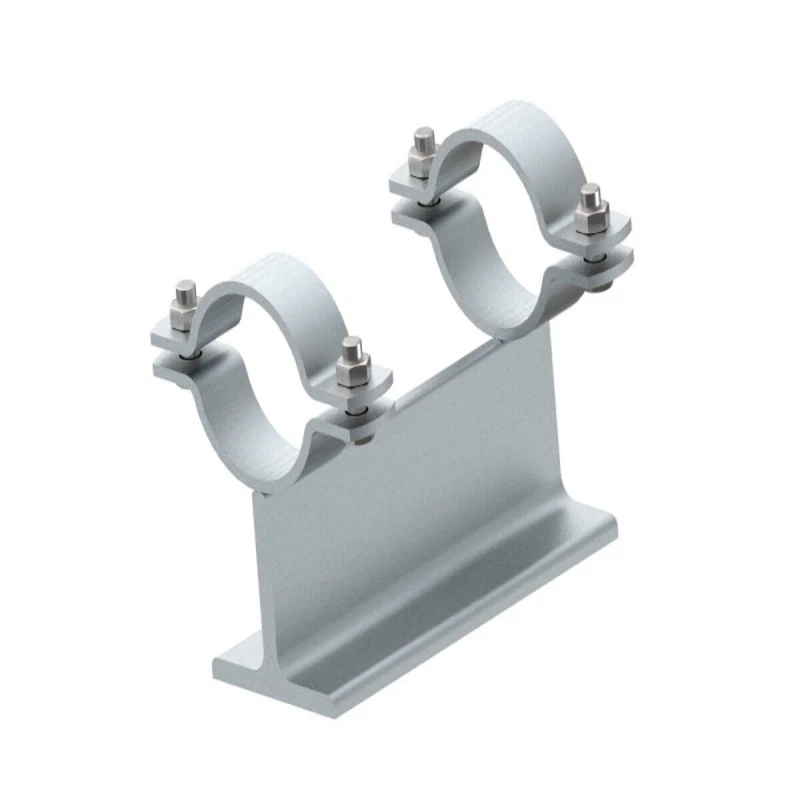
Sliding pipe saddle supports are commonly used in long piping runs or in systems where the pipe needs to move relative to the supporting structure. They can also be used in applications where the pipe needs to be installed or removed easily.
The design of sliding pipe saddle supports is critical to ensure smooth movement of the pipe. The support must be able to withstand the load of the pipe while allowing it to slide without binding or sticking.
T-Type Pipe Supports
T-Type pipe supports are a specialized type of pipe support that provides additional stability and support for pipes. There are two main types of T-Type pipe supports: T-Type Pipe Support with Wear Pad and T-Type Pipe Supports with Clamp.
T-Type Pipe Support with Wear Pad is designed to reduce wear and tear on the pipe. The wear pad is typically made of a low-friction material that protects the pipe from damage caused by movement or vibration. These supports are commonly used in applications where the pipe is subject to high levels of stress or movement.
T-Type Pipe Supports with Clamp are used to secure the pipe in place. The clamp provides a tight fit around the pipe, preventing it from moving or vibrating. These supports are often used in applications where the pipe needs to be held firmly in place, such as in high-pressure or high-vibration environments.
Insulated Pipe Saddle Supports
Insulated pipe saddle supports are used in applications where the pipe needs to be insulated to prevent heat loss or to protect the pipe from freezing. These supports typically have an insulating layer between the pipe and the support structure, which helps to reduce heat transfer.
Insulated pipe saddle supports are commonly used in HVAC systems, refrigeration systems, and other applications where temperature control is critical. The insulation material used in these supports can vary depending on the specific application and requirements.
Corrosion-resistant Pipe Saddle Supports
Corrosion-resistant pipe saddle supports are designed to withstand harsh environments and prevent corrosion of the support structure. These supports are typically made of materials such as stainless steel, aluminum, or coated steel, which are resistant to corrosion.
Corrosion-resistant pipe saddle supports are commonly used in applications where the pipe is exposed to corrosive substances, such as in chemical plants or offshore oil and gas platforms. By using corrosion-resistant supports, the lifespan of the piping system can be extended, and maintenance costs can be reduced.
Conclusion
In conclusion, there are many different types of pipe saddle supports available, each with its own unique features and applications. As a Pipe Saddle Support supplier, we offer a wide range of supports to meet the diverse needs of our customers. Whether you need a rigid support for a heavy industrial application or a spring-loaded support for a piping system with thermal expansion, we have the right solution for you.
If you are interested in learning more about our pipe saddle supports or would like to discuss your specific requirements, please contact us. Our team of experts is ready to assist you in selecting the best support for your application and providing you with high-quality products and excellent customer service.
References
- "Pipe Supports and Hangers Handbook" by David W. Fisher
- "Piping Engineering: Design, Fabrication, and Installation" by William M. McKetta