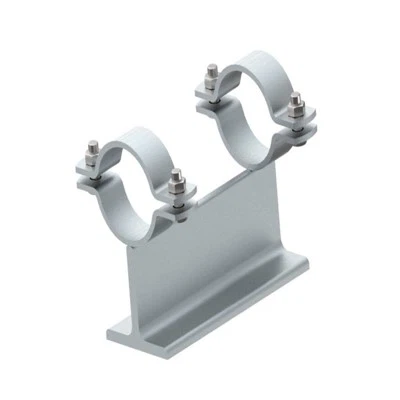
As a supplier of rigid pipe supports, I often receive inquiries about the most suitable insulation materials for these essential components in piping systems. Rigid pipe supports play a crucial role in maintaining the integrity and stability of pipelines, and choosing the right insulation material is equally important to ensure optimal performance, energy efficiency, and longevity. In this blog post, I will explore various insulation materials that are well - suited for rigid pipe supports and discuss their properties, advantages, and applications.
Mineral Wool Insulation
Mineral wool is a popular choice for insulating rigid pipe supports. It is made from natural or synthetic minerals, such as basalt or slag, which are melted and spun into fibers. Mineral wool insulation offers excellent thermal performance, with a low thermal conductivity that helps to reduce heat transfer between the pipe and the support structure.
One of the key advantages of mineral wool is its fire - resistance. It can withstand high temperatures without melting or releasing toxic fumes, making it a safe option for use in industrial and commercial settings. Additionally, mineral wool is resistant to moisture, which helps to prevent corrosion of the pipe and support. It also has good acoustic insulation properties, reducing noise transmission along the pipeline.
Mineral wool insulation can be used in a variety of rigid pipe support applications, including T - Type Pipe Supports with Clamp. These supports are commonly used in industrial piping systems to hold pipes in place and prevent movement. By insulating the support with mineral wool, the heat loss from the pipe can be minimized, improving energy efficiency.
Foam Glass Insulation
Foam glass is another excellent insulation material for rigid pipe supports. It is made by crushing and heating recycled glass with a foaming agent, resulting in a lightweight, porous material. Foam glass insulation has a very low thermal conductivity, providing effective insulation even in extreme temperature conditions.
One of the unique features of foam glass is its high compressive strength. It can withstand heavy loads without deforming, making it suitable for use in rigid pipe supports that need to support large - diameter pipes or high - pressure systems. Foam glass is also resistant to moisture, chemicals, and rodents, ensuring long - term durability.
In applications such as Pipe Saddle Support, foam glass insulation can be used to protect the pipe from heat transfer and mechanical damage. The saddle support is designed to cradle the pipe, and the insulation helps to maintain the temperature of the fluid inside the pipe while providing a stable base for the pipe.
Polyurethane Foam Insulation
Polyurethane foam is a widely used insulation material due to its high thermal efficiency and ease of installation. It is a two - component system that reacts to form a rigid foam when mixed. Polyurethane foam insulation has a very low thermal conductivity, which helps to reduce heat loss and improve energy efficiency.
One of the main advantages of polyurethane foam is its ability to conform to irregular shapes. It can be sprayed or injected into the space around the rigid pipe support, filling all the gaps and providing a seamless insulation layer. This makes it an ideal choice for complex pipe support designs, such as T - Type Pipe Support with Wear Pad. The wear pad helps to reduce friction between the pipe and the support, and the polyurethane foam insulation can further enhance the performance of the support by reducing heat transfer.
However, it is important to note that polyurethane foam is flammable and requires a fire - retardant coating to meet safety standards. Additionally, it may degrade over time when exposed to sunlight or certain chemicals.
Calcium Silicate Insulation
Calcium silicate insulation is a high - temperature insulation material that is commonly used in industrial piping systems. It is made from a mixture of calcium oxide and silica, which are combined and formed into rigid boards or blocks. Calcium silicate insulation has a high melting point and can withstand temperatures up to 1200°F (649°C).
The main advantage of calcium silicate insulation is its excellent thermal performance at high temperatures. It has a low thermal conductivity and can effectively reduce heat loss from hot pipes. Calcium silicate is also resistant to fire, moisture, and chemicals, making it a durable option for use in harsh environments.
In rigid pipe support applications, calcium silicate insulation can be used to insulate supports for high - temperature pipes, such as those in power plants or refineries. It helps to maintain the structural integrity of the support and prevent overheating of the surrounding components.
Aerogel Insulation
Aerogel is a relatively new insulation material that has gained popularity in recent years due to its exceptional thermal performance. It is a lightweight, porous material with a very low density and high surface area. Aerogel insulation has an extremely low thermal conductivity, making it one of the most effective insulation materials available.
One of the key advantages of aerogel is its thin profile. It can provide the same level of insulation as thicker layers of traditional insulation materials, which is beneficial in applications where space is limited. Aerogel is also hydrophobic, meaning it repels water, and it has good chemical resistance.


However, aerogel insulation is relatively expensive compared to other insulation materials. It is typically used in high - end applications where energy efficiency and space savings are critical, such as in aerospace or high - tech industries. In some specialized rigid pipe support applications, aerogel can be used to provide superior insulation performance.
Considerations for Choosing Insulation Materials
When choosing an insulation material for rigid pipe supports, several factors need to be considered:
- Temperature Range: The insulation material should be able to withstand the operating temperature of the pipe. For high - temperature applications, materials like calcium silicate or aerogel may be more suitable, while for normal - temperature applications, mineral wool or polyurethane foam can be used.
- Moisture Resistance: In environments where moisture is present, such as in outdoor or underground piping systems, moisture - resistant insulation materials like foam glass or mineral wool are preferred to prevent corrosion.
- Mechanical Strength: The insulation material should have sufficient mechanical strength to withstand the loads and vibrations associated with the pipe support. Foam glass and calcium silicate are known for their high compressive strength.
- Fire Resistance: In areas where fire safety is a concern, fire - resistant insulation materials like mineral wool or calcium silicate should be used.
- Cost: The cost of the insulation material is also an important factor. While aerogel offers excellent performance, its high cost may not be feasible for all applications.
Conclusion
Choosing the right insulation material for rigid pipe supports is essential for ensuring the efficient and reliable operation of piping systems. Each insulation material has its own unique properties and advantages, and the selection should be based on the specific requirements of the application. As a supplier of rigid pipe supports, I am committed to providing high - quality products and offering expert advice on insulation materials to meet the diverse needs of our customers.
If you are interested in purchasing rigid pipe supports or need more information about suitable insulation materials, please feel free to contact us for a detailed discussion. Our team of experts is ready to assist you in finding the best solutions for your piping system.
References
- "Insulation Materials Handbook", McGraw - Hill Professional
- "Piping Engineering and Design", Wiley