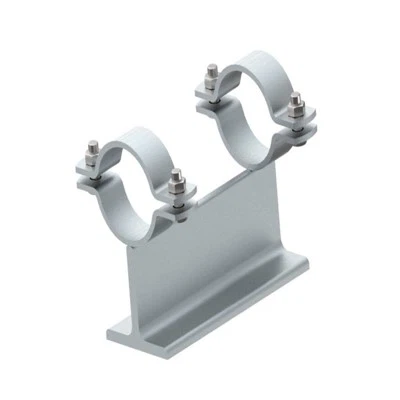
Hey there! As a supplier of Pipe Reinforcement Circles, I often get asked about the electrical conductivity of these nifty little components. So, let's dive right in and explore what the electrical conductivity of a pipe reinforcement circle actually is.
First off, what exactly is a pipe reinforcement circle? Well, it's a crucial part used to strengthen pipes, especially in situations where they might face high pressure, vibrations, or other stresses. These circles are typically made from different materials, and the material plays a huge role in determining their electrical conductivity.


Materials and Their Conductivity
- Metals: A lot of pipe reinforcement circles are made from metals like steel or aluminum. Metals are well - known for their high electrical conductivity. This is because they have free electrons that can move easily through the material when an electric field is applied. For example, steel, which is an alloy mainly composed of iron, has a relatively good electrical conductivity. The free electrons in the iron atoms can carry an electric current. Aluminum is another popular choice. It's not only lightweight but also has excellent electrical conductivity. In fact, it's widely used in electrical applications due to its ability to conduct electricity efficiently. If you're using a metal pipe reinforcement circle, you can expect it to act as a conductor, allowing electricity to flow through it.
- Non - Metals: There are also pipe reinforcement circles made from non - metallic materials such as fiberglass or certain plastics. These materials have very low electrical conductivity, almost acting as insulators. Fiberglass is made of glass fibers embedded in a resin matrix. The glass and resin are both poor conductors of electricity because they don't have free electrons available for conduction. Plastics, too, are generally insulators. They are made up of long - chain molecules where the electrons are tightly bound to the atoms, making it difficult for an electric current to pass through. So, if you choose a non - metal pipe reinforcement circle, you can be pretty sure that it won't conduct electricity in a significant way.
Why Does Electrical Conductivity Matter?
- Safety: In some industrial settings, electrical conductivity can be a matter of safety. For example, in a chemical plant where there might be a risk of static electricity build - up, using a metal pipe reinforcement circle can help to ground the static charge. This prevents the build - up of a large electrostatic potential that could potentially lead to a spark, which might ignite flammable substances. On the other hand, in an environment where you don't want electricity to spread, like in a control room with sensitive electronic equipment, a non - conductive pipe reinforcement circle would be the better choice.
- Functionality: Electrical conductivity can also affect the functionality of the overall piping system. In some cases, you might need to use a conductive pipe reinforcement circle to complete an electrical circuit. For instance, in a monitoring system where the pipe is part of an electrical sensing setup, the conductivity of the reinforcement circle can be crucial for the proper functioning of the sensors.
Related Products and Their Conductivity
- Sight Glass: When it comes to related products, sight glasses are often used in piping systems. You can check out more about them Sight Glass. Sight glasses are usually made of glass or clear plastic, which are non - conductive materials. So, they act as insulators in an electrical context.
- Rigid Pull Rods: Rigid Pull Rods are another important part of a piping system. These can be made from metals or non - metals. Metal rigid pull rods will conduct electricity, while non - metal ones will not. The choice of material for the pull rods, just like the pipe reinforcement circles, depends on the electrical requirements of the system.
- Pipe Clamps: Pipe Clamps are used to hold pipes in place. They can be made from various materials. Metal pipe clamps will have electrical conductivity, which might be useful in some applications where grounding or electrical connection is needed. Non - metal pipe clamps, such as those made from plastic, will insulate the pipe from electrical currents.
How to Choose Based on Conductivity
- Understand Your Requirements: First, you need to figure out what your electrical requirements are. If you're working in an area where electrical grounding is necessary, you'll want to go for a metal pipe reinforcement circle. If you're in a place where you need to isolate the pipe electrically, a non - metal option is the way to go.
- Consider the Environment: The environment where the pipe will be installed also matters. In a corrosive environment, a metal pipe reinforcement circle might corrode over time, affecting its electrical conductivity. In such cases, a non - metal option could be more suitable, as it will be more resistant to corrosion and maintain its electrical properties.
Conclusion
In conclusion, the electrical conductivity of a pipe reinforcement circle depends on the material it's made of. Metals are good conductors, while non - metals are insulators. Understanding the electrical conductivity is crucial for safety and functionality in a piping system. Whether you need a conductive or non - conductive pipe reinforcement circle, we've got you covered. If you're interested in purchasing pipe reinforcement circles or have any questions about their electrical conductivity, feel free to reach out for a procurement discussion. We can help you choose the right product based on your specific needs.
References
- "Materials Science and Engineering: An Introduction" by William D. Callister, Jr. and David G. Rethwisch
- Industrial Piping Handbook, various editions