


What is the fatigue life of pipe lugs?
As a leading supplier of Pipe Lugs, I often get asked about the fatigue life of these crucial components. Pipe lugs are used in a wide range of industries, including oil and gas, chemical processing, and power generation, to support and secure pipes. Understanding their fatigue life is essential for ensuring the long - term reliability and safety of piping systems.
Factors Affecting the Fatigue Life of Pipe Lugs
The fatigue life of pipe lugs is influenced by several factors. First and foremost is the material from which they are made. High - quality materials such as stainless steel or alloy steel generally have better fatigue resistance compared to lower - grade materials. Stainless steel, for example, is corrosion - resistant, which helps prevent the initiation and propagation of cracks that can lead to fatigue failure. Alloy steel can be heat - treated to achieve specific mechanical properties, enhancing its ability to withstand cyclic loading.
The design of the pipe lug also plays a significant role. A well - designed pipe lug distributes stress evenly across its structure. For instance, a lug with smooth transitions and proper fillets at critical points reduces stress concentrations. Stress concentrations are areas where the stress is much higher than the average stress in the component, and they are often the starting points for fatigue cracks. Additionally, the shape and size of the lug are important. A larger lug may be able to handle more load, but it also needs to be designed in a way that minimizes stress concentrations.
The operating environment is another crucial factor. Pipes are often exposed to harsh conditions such as high temperatures, corrosive chemicals, and vibrations. High temperatures can reduce the strength of the material over time, making it more susceptible to fatigue. Corrosive chemicals can eat away at the surface of the pipe lug, creating pits and flaws that can act as crack initiation sites. Vibrations, whether from machinery or fluid flow, can cause cyclic loading on the pipe lug, accelerating the fatigue process.
The type and magnitude of the load applied to the pipe lug are also vital. Static loads, which are constant over time, generally have a less severe impact on fatigue life compared to dynamic loads. Dynamic loads, such as those caused by fluid surges or seismic activity, can cause cyclic stress variations in the pipe lug. The higher the magnitude of the dynamic load and the more frequent the cycles, the shorter the fatigue life of the pipe lug.
Calculating the Fatigue Life of Pipe Lugs
Calculating the fatigue life of pipe lugs is a complex process that involves engineering knowledge and specialized software. One common approach is to use the S - N curve method. The S - N curve, also known as the stress - life curve, shows the relationship between the stress amplitude (S) and the number of cycles to failure (N). To use this method, engineers first need to determine the stress amplitude acting on the pipe lug under the expected operating conditions. This can be done through finite element analysis (FEA), which is a numerical technique used to simulate the behavior of structures under different loads.
Once the stress amplitude is determined, engineers can refer to the S - N curve for the specific material of the pipe lug. The S - N curve is usually obtained through laboratory testing, where specimens of the material are subjected to cyclic loading until failure. By finding the corresponding number of cycles to failure on the S - N curve for the calculated stress amplitude, engineers can estimate the fatigue life of the pipe lug.
However, it's important to note that the S - N curve method has its limitations. It assumes that the material is homogeneous and that the loading is fully reversed (i.e., the stress alternates between equal positive and negative values). In real - world applications, the loading conditions may be more complex, and the material may have inhomogeneities due to manufacturing processes or environmental factors. Therefore, other methods such as fracture mechanics may also be used in conjunction with the S - N curve method to get a more accurate estimate of the fatigue life.
Importance of Understanding Fatigue Life
Understanding the fatigue life of pipe lugs is crucial for several reasons. From a safety perspective, a pipe lug that fails due to fatigue can cause pipes to fall or become misaligned, leading to leaks, spills, or even explosions in some industries. This can endanger the lives of workers and the surrounding community.
From an economic point of view, premature failure of pipe lugs can result in costly downtime for maintenance and replacement. In industries where continuous operation is essential, such as power plants or refineries, even a short period of downtime can lead to significant financial losses. By accurately estimating the fatigue life of pipe lugs, companies can plan for timely maintenance and replacement, reducing the risk of unexpected failures and minimizing costs.
Our Role as a Pipe Lugs Supplier
As a Pipe Lugs supplier, we are committed to providing our customers with high - quality products that have a long fatigue life. We use only the best materials and state - of - the - art manufacturing processes to ensure the reliability of our pipe lugs. Our engineering team is experienced in designing pipe lugs that are optimized for different operating conditions, taking into account factors such as stress distribution and environmental resistance.
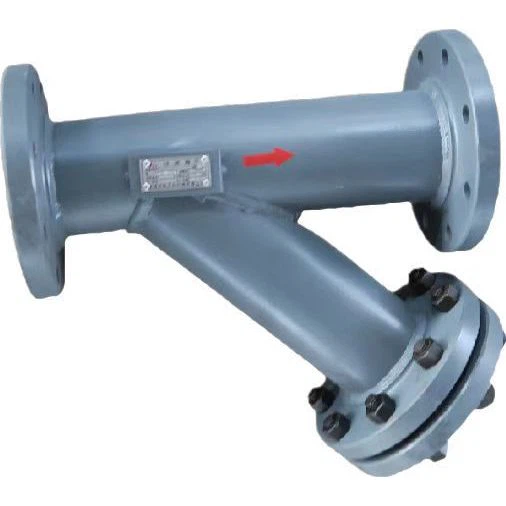

We also offer technical support to our customers. If you are unsure about the fatigue life of the pipe lugs for your specific application, our engineers can work with you to calculate the expected fatigue life using advanced analysis tools. We can also provide recommendations on how to extend the fatigue life of the pipe lugs, such as proper installation techniques and maintenance schedules.
In addition to pipe lugs, we also supply a wide range of related products. For example, we offer Pipe Clamps that can be used in conjunction with pipe lugs to provide additional support for pipes. Our Pipeline Filter products can help protect the piping system from contaminants, reducing the risk of corrosion and damage to the pipe lugs.
Contact Us for Your Pipe Lugs Needs
If you are in the market for high - quality pipe lugs or need more information about their fatigue life, we invite you to contact us. Our team is ready to assist you in selecting the right products for your application and answering any questions you may have. We understand the importance of reliable piping systems, and we are dedicated to helping you achieve long - term success in your projects. Whether you are involved in a small - scale industrial project or a large - scale infrastructure development, we have the expertise and products to meet your needs. Visit our Pipe Lugs page to learn more about our product offerings.
References
- Barsom, J. M., & Rolfe, S. T. (1999). Fracture and fatigue control in structures: applications of fracture mechanics. Prentice Hall.
- Dowling, N. E. (2012). Mechanical behavior of materials: engineering methods for deformation, fracture, and fatigue. Pearson.
- Shigley, J. E., Mischke, C. R., & Budynas, R. G. (2004). Mechanical engineering design. McGraw - Hill.


