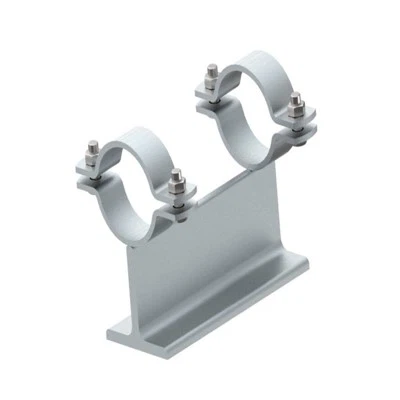
Hey there! As a supplier of Pipe Reinforcement Circles, I often get asked about the standard size of these crucial components. So, I thought I'd take a deep dive into this topic and share some insights with you all.
First off, let's understand what a pipe reinforcement circle is and why it's so important. A pipe reinforcement circle is a ring-shaped device that's used to strengthen pipes at critical points. It helps distribute stress evenly, preventing the pipe from cracking or failing under pressure. This is especially important in industries like oil and gas, water treatment, and construction, where pipes are subjected to high pressures and harsh conditions.


Now, onto the question of standard sizes. There isn't a one-size-fits-all answer here, as the size of a pipe reinforcement circle depends on several factors. The most obvious one is the diameter of the pipe it's meant to reinforce. Pipes come in all sorts of diameters, from small ones used in residential plumbing to massive ones used in industrial pipelines.
For smaller pipes, say those with diameters ranging from 1/2 inch to 4 inches, the reinforcement circles are typically proportionally sized. These are commonly used in household plumbing systems, HVAC systems, and small-scale industrial applications. The thickness of the reinforcement circle for these pipes is usually around 1/8 inch to 1/4 inch, depending on the pressure the pipe will face.
When we move on to medium-sized pipes, with diameters between 4 inches and 12 inches, the reinforcement circles need to be a bit more substantial. The thickness might increase to 3/8 inch to 1/2 inch. These pipes are often found in commercial buildings, municipal water supply systems, and medium-sized industrial plants.
Large pipes, with diameters over 12 inches, are a whole different ballgame. These are used in major infrastructure projects like oil pipelines, large water treatment facilities, and power plants. The reinforcement circles for these pipes can be quite thick, sometimes up to 1 inch or more. The size and thickness are carefully calculated based on the specific requirements of the project, including the type of fluid flowing through the pipe, the pressure, and the environmental conditions.
Another factor that affects the size of the pipe reinforcement circle is the material of the pipe. Different materials have different strength properties, so the reinforcement needs to be adjusted accordingly. For example, a steel pipe might require a different size and thickness of reinforcement compared to a plastic or fiberglass pipe.
In addition to the diameter and material, the type of connection also plays a role. If the pipe is connected using flanges, the reinforcement circle might need to be designed to fit around the flange, which can add to its overall size.
Now, let's talk about some related products that are often used in conjunction with pipe reinforcement circles. One of these is the Sight Glass. A sight glass is a transparent window installed in a pipe to allow visual inspection of the fluid inside. It's a handy tool for monitoring the flow, detecting any blockages or contaminants, and ensuring the proper operation of the system.
Another useful product is the Pipe Clamps. Pipe clamps are used to secure pipes in place, preventing them from moving or vibrating. They come in various sizes and designs to fit different pipe diameters and installation requirements.
And then there's the U-Type Bolt. U-type bolts are often used to support pipes from below or to attach them to structures. They're a simple yet effective way to keep pipes in position and prevent them from sagging or shifting.
As a supplier of pipe reinforcement circles, I understand the importance of getting the right size for your specific needs. That's why we offer a wide range of sizes and custom options. Whether you're working on a small DIY project or a large-scale industrial installation, we can provide the perfect pipe reinforcement circle for you.
If you're in the market for pipe reinforcement circles or any of the related products I mentioned, I'd love to have a chat with you. We can discuss your project requirements, go over the different options available, and find the best solution for you. Contact us to start the conversation and let's work together to ensure the success of your project.
References
- "Pipe Fittings Handbook" by Eric P. Popiel
- "Handbook of Industrial Pipeline Design" by George A. Antaki