What is the Thermal Expansion Coefficient of Rigid Pull Rods?
As a supplier of Rigid Pull Rods, I often encounter inquiries from clients about various technical aspects of our products. One of the frequently asked questions is about the thermal expansion coefficient of rigid pull rods. In this blog post, I will delve into this topic in detail, explaining what the thermal expansion coefficient is, its significance for rigid pull rods, and how it impacts the performance and application of these essential components.
Understanding the Thermal Expansion Coefficient
The thermal expansion coefficient is a physical property that describes how a material changes in size or volume in response to a change in temperature. It is defined as the fractional change in length or volume per unit change in temperature. There are two main types of thermal expansion coefficients: the linear thermal expansion coefficient (α) and the volumetric thermal expansion coefficient (β).
The linear thermal expansion coefficient measures the change in length of a material per unit length per degree change in temperature. Mathematically, it is expressed as:
α = (ΔL / L₀) / ΔT
where:
- α is the linear thermal expansion coefficient (in units of per degree Celsius or per Kelvin)
- ΔL is the change in length
- L₀ is the original length
- ΔT is the change in temperature
The volumetric thermal expansion coefficient, on the other hand, measures the change in volume of a material per unit volume per degree change in temperature. For isotropic materials (materials with the same properties in all directions), the volumetric thermal expansion coefficient is approximately three times the linear thermal expansion coefficient (β ≈ 3α).

Significance of the Thermal Expansion Coefficient for Rigid Pull Rods
Rigid pull rods are widely used in various industries, including construction, mechanical engineering, and pipeline systems. They play a crucial role in providing structural support, maintaining alignment, and transferring loads. The thermal expansion coefficient of rigid pull rods is of great significance for several reasons:
- Dimensional Stability: When the temperature changes, rigid pull rods will expand or contract according to their thermal expansion coefficient. If the thermal expansion coefficient is too large, significant dimensional changes may occur, which can affect the accuracy of the structure or the pipeline system. For example, in a precision machinery installation, even a small change in the length of a rigid pull rod due to temperature variation can lead to misalignment and affect the performance of the entire equipment.
- Stress and Strain: Thermal expansion or contraction of rigid pull rods can generate stress and strain within the material. If the stress exceeds the yield strength of the material, it can cause permanent deformation or even failure of the pull rod. Therefore, understanding the thermal expansion coefficient is essential for designing rigid pull rods that can withstand temperature variations without experiencing excessive stress.
- Compatibility with Other Materials: In many applications, rigid pull rods are used in conjunction with other materials. The difference in thermal expansion coefficients between the pull rod and the adjacent materials can lead to differential expansion or contraction, which may cause joint failure, leakage, or other problems. For instance, in a pipeline system, if the thermal expansion coefficient of the rigid pull rod is significantly different from that of the pipeline, it can create stress concentrations at the connection points, increasing the risk of pipe damage.
Factors Affecting the Thermal Expansion Coefficient of Rigid Pull Rods
The thermal expansion coefficient of rigid pull rods is influenced by several factors, including:
- Material Composition: Different materials have different thermal expansion coefficients. For example, metals generally have relatively high thermal expansion coefficients, while ceramics and some composite materials have lower values. Commonly used materials for rigid pull rods include steel, stainless steel, and aluminum, each with its own characteristic thermal expansion coefficient. Steel typically has a linear thermal expansion coefficient in the range of about 10 - 13 × 10⁻⁶ /°C, stainless steel around 16 - 17 × 10⁻⁶ /°C, and aluminum around 23 × 10⁻⁶ /°C.
- Microstructure: The microstructure of the material can also affect its thermal expansion coefficient. Heat treatment, alloying, and the presence of impurities or defects can all influence the atomic arrangement and bonding within the material, thereby altering its thermal expansion behavior.
- Temperature Range: The thermal expansion coefficient is not always constant over a wide temperature range. In some cases, it may vary with temperature. For example, some materials may exhibit a non - linear relationship between temperature and expansion at high temperatures. Therefore, it is important to consider the specific temperature range in which the rigid pull rods will be used when evaluating their thermal expansion characteristics.
Applications and Considerations in Different Industries
- Construction Industry: In the construction of buildings and bridges, rigid pull rods are used to provide structural support and stability. Temperature variations can cause the pull rods to expand or contract, which may affect the overall structural integrity. Engineers need to carefully select rigid pull rods with appropriate thermal expansion coefficients and consider temperature - induced stresses in the design process. For example, in large - span bridges, where the environmental temperature can vary significantly, using materials with suitable thermal expansion properties can help prevent excessive stress buildup and ensure the long - term safety of the structure.
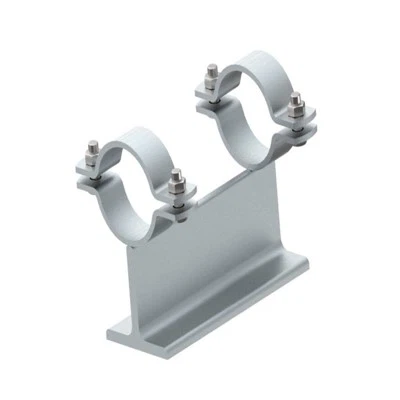
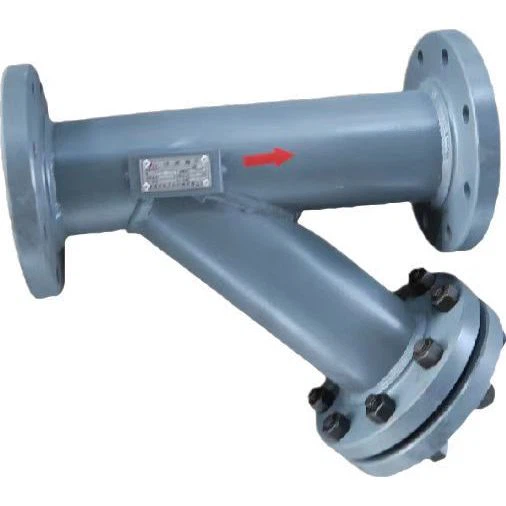
- Pipeline Systems: Rigid pull rods are often used in pipeline systems to secure pipes, maintain their alignment, and absorb vibrations. In pipeline applications, the thermal expansion of the pipes themselves must be coordinated with the thermal expansion of the pull rods. Additionally, the Pipeline Filter and Pipe Reinforcement Circle installed in the pipeline system also need to be considered in terms of their thermal expansion compatibility with the rigid pull rods. For instance, in a hot - water pipeline system, the temperature of the fluid flowing through the pipes can cause significant thermal expansion. If the rigid pull rods do not have a compatible thermal expansion coefficient, it can lead to pipe distortion, leakage, or even rupture.
- Mechanical Engineering: In machinery and equipment, rigid pull rods are used for precise positioning and load transfer. The thermal expansion coefficient of the pull rods can affect the accuracy and performance of the machinery. For example, in a high - precision lathe, the thermal expansion of the rigid pull rods used to support the cutting tool can cause changes in the cutting position, affecting the machining accuracy. Therefore, in mechanical engineering applications, materials with low and stable thermal expansion coefficients are often preferred.
Thermal Expansion Compensation
To address the issues caused by thermal expansion of rigid pull rods, various thermal expansion compensation methods can be employed:
- Flexible Joints: Installing flexible joints in the rigid pull rod system can absorb the thermal expansion or contraction. These joints can be made of materials with high flexibility, such as rubber or metal bellows. They allow the pull rod to move freely within a certain range without generating excessive stress.
- Sliding Supports: Using sliding supports can also help accommodate the thermal movement of rigid pull rods. Sliding supports allow the pull rod to slide along a certain direction when it expands or contracts, reducing the restraint and stress on the rod.
- Material Selection: Choosing materials with low thermal expansion coefficients or materials that are compatible with the surrounding components can minimize the impact of thermal expansion. For example, in some applications, using Invar, a nickel - iron alloy with an extremely low thermal expansion coefficient, can provide excellent dimensional stability.
Conclusion
The thermal expansion coefficient is an important property of rigid pull rods that affects their dimensional stability, stress distribution, and compatibility with other materials. As a supplier of Rigid Pull Rods, we understand the significance of this property and offer a wide range of products with different thermal expansion characteristics to meet the diverse needs of our customers. Whether you are in the construction, mechanical engineering, or pipeline industry, choosing the right rigid pull rods with appropriate thermal expansion coefficients is crucial for ensuring the reliability and performance of your projects.
If you are interested in our Rigid Pull Rods or have any questions about their thermal expansion properties, please feel free to contact us for further discussion and procurement negotiation. We are committed to providing you with high - quality products and professional technical support.
References
- Callister, W. D., & Rethwisch, D. G. (2017). Materials Science and Engineering: An Introduction. Wiley.
- Ashby, M. F., & Jones, D. R. H. (2012). Engineering Materials 1: An Introduction to Properties, Applications, and Design. Butterworth - Heinemann.
- Incropera, F. P., DeWitt, D. P., Bergman, T. L., & Lavine, A. S. (2017). Fundamentals of Heat and Mass Transfer. Wiley.