


How do counterweights work in cranes?
Cranes are essential pieces of equipment in the construction, shipping, and various heavy - industry sectors. Their ability to lift and move heavy loads is crucial for the successful execution of numerous projects. One of the key elements that make cranes function safely and efficiently is the counterweight system. As a counterweights supplier, I'm well - versed in the science and practical applications of these important components.
The Basic Principle of Counterweights in Cranes
The fundamental concept behind counterweights in cranes is based on the principle of moments in physics. A moment is the product of a force and the perpendicular distance from the point of rotation (or the pivot point) to the line of action of the force. In a crane, the load being lifted creates a clockwise moment around the crane's pivot point. To prevent the crane from tipping over, a counter - balancing force is required. This is where the counterweight comes in. The counterweight is placed on the opposite side of the load, creating an anti - clockwise moment.
For a crane to be in equilibrium (not tipping over), the sum of the clockwise moments must equal the sum of the anti - clockwise moments. Mathematically, if (F_1) is the force exerted by the load, (d_1) is the distance of the load from the pivot point, (F_2) is the force exerted by the counterweight, and (d_2) is the distance of the counterweight from the pivot point, then for equilibrium (F_1\times d_1=F_2\times d_2).
Types of Crane Counterweights
There are several types of counterweights used in different crane designs.
Fixed Counterweights
Fixed counterweights are an integral part of the crane structure. They are designed and installed during the manufacturing process and are not easily adjustable. These counterweights are typically sized to handle the maximum load capacity of the crane under normal operating conditions. For example, in some small - to - medium - sized tower cranes, fixed counterweights are used to provide a basic level of stability.
Mobile or Adjustable Counterweights
Mobile counterweights can be moved along a track or adjusted in position. This allows the crane operator to fine - tune the counter - balancing effect based on the weight and position of the load. In larger lattice - boom cranes, adjustable counterweights can be repositioned to adapt to different lifting configurations. Some cranes even have the ability to add or remove additional counterweight blocks, providing even greater flexibility for varying load requirements.

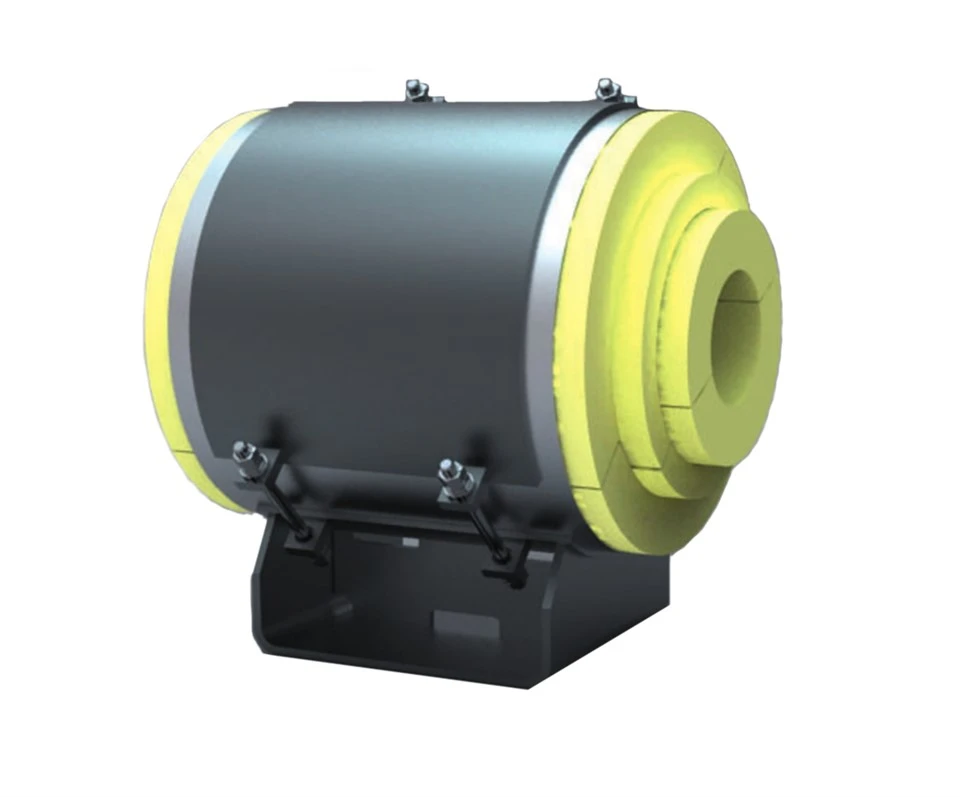
Hydraulic Counterweights
Hydraulic counterweights use fluid power to adjust their position or function as a counter - balancing force. In some modern cranes, hydraulic cylinders are used to move the counterweight, allowing for quick and precise adjustments. This technology is particularly useful in situations where rapid changes in load or operating conditions occur.
Design Considerations for Crane Counterweights
Designing effective counterweights for cranes involves a number of important factors.
Weight and Mass
The weight of the counterweight is a critical factor. It must be carefully calculated to ensure that it can counterbalance the maximum expected load. The mass of the counterweight is also important as it affects the inertia of the system. A heavier counterweight will have more inertia, which can make the crane more stable but may also require more energy to move if it is an adjustable counterweight.
Material Selection
The choice of material for the counterweight is crucial. Common materials include concrete, cast iron, and steel. Concrete is a popular choice due to its relatively low cost and ease of manufacture. It can be molded into various shapes and sizes. Cast iron offers high density and good strength, making it suitable for applications where a compact counterweight is required. Steel is strong and durable, and can be fabricated into complex shapes, but it is generally more expensive than concrete.
Shape and Size
The shape and size of the counterweight can also impact its effectiveness. A well - designed counterweight should be shaped in a way that maximizes its moment arm (the perpendicular distance from the pivot point). Additionally, the size of the counterweight must be compatible with the crane's overall design and operating space.
The Role of Counterweights in Different Crane Types
Tower Cranes
Tower cranes are commonly used in high - rise construction projects. These cranes have a tall tower structure with a horizontal jib. Counterweights are placed at the rear of the crane, on the opposite side of the jib where the load is lifted. The counterweights are carefully calculated to balance the loads lifted at various radii along the jib. As the load moves further out on the jib, the moment created by the load increases, and the counterweight must be sufficient to maintain stability.
Mobile Cranes
Mobile cranes, such as truck - mounted cranes and crawler cranes, are designed to be easily transportable. They often have adjustable counterweights to adapt to different lifting scenarios. For example, when a truck - mounted crane is driving on the road, it may have a reduced amount of counterweight to keep the vehicle within legal weight limits. When it arrives at the worksite and needs to lift a heavy load, additional counterweight blocks can be added.
Overhead Cranes
Overhead cranes are used in factories and warehouses to lift and move heavy objects within a defined area. Counterweights in overhead cranes are typically part of the bridge structure that runs along the overhead tracks. They help to balance the load being lifted and ensure smooth operation of the crane.
Maintenance and Safety of Crane Counterweights
Proper maintenance and safety measures are essential when it comes to crane counterweights.
Inspection
Regular inspections of the counterweights are necessary to check for any signs of damage, such as cracks in concrete counterweights or corrosion in steel or cast - iron ones. The connection points between the counterweight and the crane should also be inspected to ensure they are secure.
Safety Precautions
When working with counterweights, safety precautions must be strictly followed. Operators should be trained on the proper use and adjustment of counterweights. In the case of adjustable counterweights, the correct procedures for adding or removing counterweight blocks must be adhered to. Additionally, any changes in the load - lifting requirements should be carefully considered to ensure that the counterweight system can still provide adequate stability.
As a counterweights supplier, we understand the importance of providing high - quality counterweights that meet the specific needs of different crane applications. Our counterweights are designed and manufactured with precision, using the best materials and the latest manufacturing techniques. Whether you need fixed counterweights for a small tower crane or adjustable counterweights for a large mobile crane, we have the solutions for you.
If you are in the market for counterweights for your cranes, or if you have any questions about how counterweights work and which type would be best for your application, we encourage you to Contact us for procurement and further discussions. We also offer related products such as Cold/Cryogenic Pipe Support For Oil And Gas and Cold/Cryogenic Pipe Support For LNG that may be useful in your operations.
References
- Engineering Mechanics: Statics and Dynamics, by J.L. Meriam and L.G. Kraige
- Crane Handbook: A Guide to Crane Operation and Safety, by C.G. Salmon and J.E. Johnson
- Principles of Mechanical Engineering, by K.L. Narayana and P. Kannappan


