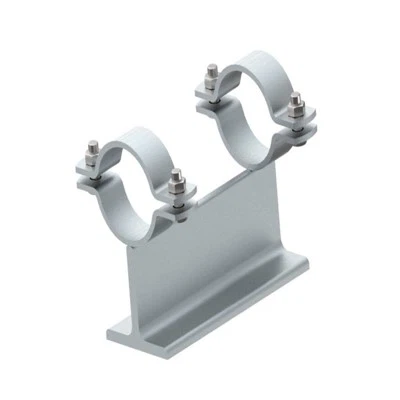
Cold pipe supports play a crucial role in various industrial applications, especially in systems where pipes carry cryogenic or cold fluids. These supports are designed to withstand the unique challenges posed by low temperatures, including thermal contraction, expansion, and the effects of cyclic loading. As a cold pipe support supplier, understanding how long these supports can endure cyclic loading is essential for ensuring the reliability and safety of piping systems.
Understanding Cyclic Loading in Cold Pipe Supports
Cyclic loading refers to the repeated application of stress on a structure or component. In the context of cold pipe supports, cyclic loading can occur due to a variety of factors. Temperature fluctuations are a primary cause, as the pipes expand and contract with changes in the temperature of the fluid they carry. For example, in a liquefied natural gas (LNG) processing plant, the pipes may experience significant temperature changes as the LNG is cooled, stored, and then vaporized. These temperature - induced expansions and contractions put stress on the cold pipe supports.
Vibrations also contribute to cyclic loading. Machinery connected to the piping system, such as pumps and compressors, can generate vibrations that are transmitted to the pipes and their supports. Additionally, fluid flow within the pipes can cause turbulence and pulsations, leading to further cyclic stress on the supports.
Factors Affecting the Endurance of Cold Pipe Supports under Cyclic Loading
Material Properties
The material used in cold pipe supports is a critical factor in determining their endurance under cyclic loading. Common materials for cold pipe supports include stainless steel, carbon steel, and various types of polymers. Stainless steel is often preferred for its corrosion resistance and good mechanical properties at low temperatures. It has high strength and ductility, which allows it to withstand repeated stress without significant deformation or failure.
Carbon steel is also widely used, but it may require additional protection against corrosion in cold environments. Polymers, on the other hand, offer advantages such as low thermal conductivity, which can help reduce heat transfer from the pipes to the support structure. However, their mechanical properties may be more sensitive to temperature and cyclic loading compared to metals.
Design and Geometry
The design and geometry of cold pipe supports can significantly impact their ability to endure cyclic loading. Supports with proper reinforcement and a well - thought - out shape can distribute stress more evenly. For example, a well - designed restraint and guide cold pipe support Restraint and Guide Cold Pipe Support can effectively control the movement of the pipe while minimizing stress concentrations. A guided cryogenic pipe support Guided Cryogenic Pipe Support is designed to provide precise guidance to the pipe during thermal expansion and contraction, reducing the risk of fatigue failure.
Installation Quality
Proper installation is essential for the long - term performance of cold pipe supports under cyclic loading. Incorrect installation can lead to misalignment, which can cause uneven stress distribution on the supports. For example, if a sliding cold insulation pipe support Sliding Cold Insulation Pipe Supports is not installed correctly, it may not slide smoothly during thermal movement, resulting in increased stress and premature failure.
Estimating the Endurance of Cold Pipe Supports
To estimate how long cold pipe supports can endure cyclic loading, engineers often use fatigue analysis techniques. Fatigue analysis involves predicting the number of stress cycles a component can withstand before failure. This is typically done by using S - N curves, which show the relationship between the stress amplitude and the number of cycles to failure for a given material.
However, in real - world applications, the actual endurance of cold pipe supports can be affected by many factors that are difficult to account for in a simple analysis. Environmental factors such as humidity, chemical exposure, and the presence of abrasive particles can accelerate the fatigue process. Therefore, field monitoring and regular inspections are crucial for accurately assessing the condition of cold pipe supports over time.
Case Studies
In a large - scale LNG terminal, a series of cold pipe supports were installed to support the cryogenic pipes. After several years of operation, some of the supports showed signs of fatigue cracking. A detailed investigation revealed that the cyclic loading caused by temperature fluctuations and fluid flow was the primary cause of the damage. The supports were made of carbon steel, and although they were initially coated to prevent corrosion, the coating had deteriorated over time, exposing the steel to the harsh cold environment.
In another case, a chemical processing plant used guided cryogenic pipe supports. These supports were designed to handle the thermal expansion and contraction of the pipes carrying cold chemicals. Through regular inspections and monitoring, it was found that the supports had maintained their integrity for over a decade. The high - quality stainless steel material and the well - designed geometry of the supports contributed to their long - term endurance under cyclic loading.
Improving the Endurance of Cold Pipe Supports
To improve the endurance of cold pipe supports under cyclic loading, several measures can be taken. Firstly, selecting the appropriate material is crucial. As mentioned earlier, stainless steel is often a good choice for its excellent mechanical properties at low temperatures and corrosion resistance.
Secondly, improving the design of the supports can enhance their performance. This may involve using advanced finite element analysis (FEA) techniques to optimize the geometry and stress distribution. Additionally, incorporating features such as shock absorbers or vibration dampers can help reduce the impact of cyclic loading.


Regular maintenance is also essential. This includes inspecting the supports for signs of wear, corrosion, and damage, and replacing any components that show significant deterioration. Applying protective coatings can also help prevent corrosion and extend the lifespan of the supports.
Conclusion
As a cold pipe support supplier, understanding the factors that affect the endurance of cold pipe supports under cyclic loading is of utmost importance. By considering material properties, design and geometry, installation quality, and environmental factors, we can provide high - quality supports that can withstand the rigors of cyclic loading for an extended period.
If you are in need of reliable cold pipe supports for your industrial application, we are here to help. Our team of experts can work with you to select the most suitable supports based on your specific requirements. Contact us today to start a discussion about your cold pipe support needs and explore how our products can contribute to the long - term reliability of your piping system.
References
- "Fatigue of Materials" by Norman E. Dowling
- "Piping Design Handbook" by George A. Antaki
- Industry standards and guidelines related to cold pipe support design and installation