


Hey there! As a Pipeline Filter supplier, I'm stoked to share with you how to use the Pipeline Filter pattern for real-time data processing. It's a super cool and efficient way to handle data, and I'm gonna break it down for you step by step.

What is the Pipeline Filter Pattern?
First things first, let's talk about what the Pipeline Filter pattern actually is. Picture a real-life pipeline, like the ones used to transport oil or water. It's a series of connected pipes that move the substance from one place to another. Along the way, there are filters that clean, separate, or modify the substance.
In the world of data processing, the Pipeline Filter pattern works in a similar way. You have a series of filters (or processing steps) connected in a pipeline. Data flows through this pipeline, and each filter performs a specific operation on the data. This could be anything from cleaning the data, to transforming it, to aggregating it.
The beauty of this pattern is that it's modular and flexible. You can easily add, remove, or modify filters without affecting the rest of the pipeline. It also makes the code easier to understand and maintain.
Setting Up Your Pipeline
So, how do you set up a Pipeline Filter for real-time data processing? Well, the first step is to define your filters. Each filter should have a single responsibility. For example, you might have a filter that removes duplicate data, another that converts data types, and yet another that aggregates data.
Let's say you're dealing with a stream of sensor data. Your first filter could be a data cleaning filter. This filter would remove any invalid or missing data points. Here's a simple example of what this filter might look like in Python:
def data_cleaning_filter(data):
    cleaned_data = []
    for data_point in data:
        if data_point is not None:
            cleaned_data.append(data_point)
    return cleaned_data
Once you've defined your filters, you need to connect them in a pipeline. You can do this by chaining the filters together. Each filter takes the output of the previous filter as its input.
def pipeline(data):
    cleaned_data = data_cleaning_filter(data)
    # Add more filters here
    return cleaned_data
Real-Time Data Processing
Now, let's talk about real-time data processing. When dealing with real-time data, you need to be able to process the data as it arrives. This means your pipeline needs to be able to handle a continuous stream of data.
One way to do this is by using a streaming framework like Apache Kafka or Apache Flink. These frameworks allow you to ingest, process, and analyze real-time data streams.
Let's say you're using Apache Kafka to ingest your sensor data. You can set up a Kafka producer to send the data to a Kafka topic. Then, you can set up a Kafka consumer to read the data from the topic and pass it through your Pipeline Filter.
from kafka import KafkaConsumer

consumer = KafkaConsumer('sensor-data-topic', bootstrap_servers='localhost:9092')

for message in consumer:
    data = message.value
    processed_data = pipeline(data)
    # Do something with the processed data
    print(processed_data)
Using Accessories in Your Pipeline
In a real-world pipeline, you might need some accessories to make it work properly. Just like in a physical pipeline where you might use Pipe Lugs to support the pipes, in a data pipeline, you might need certain tools or components to support the data flow.
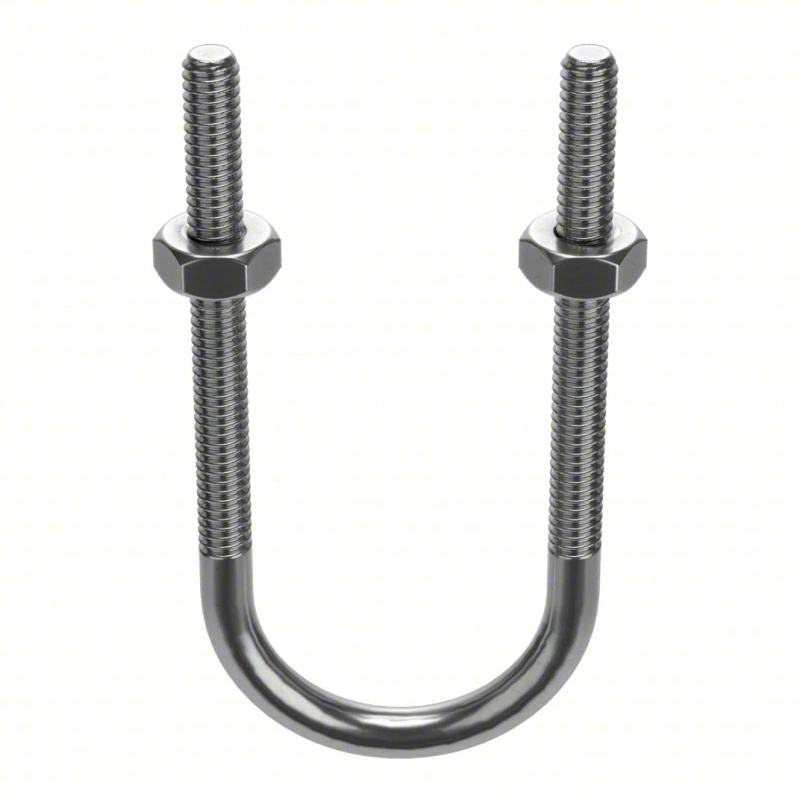
For example, you might use a U-Type Bolt to secure a part of your physical infrastructure that houses your data processing components. And a Pipe Reinforcement Circle could be thought of as a way to strengthen your data pipeline, perhaps by adding redundancy or backup mechanisms.
Monitoring and Optimization
Once your Pipeline Filter is up and running, it's important to monitor its performance. You can use monitoring tools to track things like the throughput of your pipeline, the latency of each filter, and the error rate.
If you notice that a particular filter is causing a bottleneck, you might need to optimize it. This could involve rewriting the code to make it more efficient, or scaling up the resources allocated to that filter.
Benefits of the Pipeline Filter Pattern
There are several benefits to using the Pipeline Filter pattern for real-time data processing. Firstly, as I mentioned earlier, it's modular and flexible. This means you can easily adapt your pipeline to changing requirements.
Secondly, it's easy to test. Since each filter has a single responsibility, you can test each filter independently. This makes it easier to identify and fix bugs.
Finally, it's scalable. You can add more filters or scale up the resources allocated to each filter as your data volume grows.
Conclusion
So, there you have it! That's how you can use the Pipeline Filter pattern for real-time data processing. It's a powerful and efficient way to handle data, and I hope this guide has given you a good understanding of how to set it up.
If you're interested in implementing a Pipeline Filter for your real-time data processing needs, or if you have any questions about the accessories we offer, like Pipe Lugs, U-Type Bolt, or Pipe Reinforcement Circle, feel free to reach out. We're here to help you build the best data pipeline for your business.
References
- "Design Patterns: Elements of Reusable Object-Oriented Software" by Erich Gamma, Richard Helm, Ralph Johnson, and John Vlissides.
- Apache Kafka Documentation
- Apache Flink Documentation


