In the realm of engineering and industrial applications, dampers play a pivotal and often under - appreciated role. As a damper supplier, I have witnessed firsthand the diverse functions and significance of dampers across various sectors. In this blog, we will delve deep into the functions of dampers, exploring their importance in different contexts and how they contribute to the safety, efficiency, and performance of numerous systems.
Fundamental Concept of Dampers
Before we discuss the functions, it's essential to understand what a damper is. A damper is a device designed to absorb, dissipate, or control energy, usually in the form of mechanical vibrations, shocks, or fluid flow. It acts as a buffer, reducing the impact of dynamic forces and ensuring the smooth operation of systems. There are different types of dampers, including hydraulic, pneumatic, and mechanical dampers, each with its unique characteristics and applications.
Vibration Damping
One of the primary functions of a damper is to reduce vibrations. In many industrial settings, machinery and equipment generate vibrations during operation. These vibrations can cause several problems, such as premature wear and tear of components, reduced accuracy in precision equipment, and even structural damage over time.
For example, in a manufacturing plant, large motors and pumps can produce significant vibrations. If left unaddressed, these vibrations can lead to loosening of bolts, misalignment of parts, and ultimately, equipment failure. A well - designed damper can absorb the vibrational energy and convert it into heat, which is then dissipated into the surrounding environment. This not only extends the lifespan of the equipment but also improves its overall performance and reliability.
In the automotive industry, dampers are crucial for a smooth and comfortable ride. Shock absorbers, which are a type of damper, are used to control the movement of the vehicle's suspension system. When a car hits a bump or pothole, the shock absorber compresses and extends, absorbing the energy from the impact and preventing the vehicle from bouncing excessively. This ensures that the tires maintain contact with the road surface, providing better traction and handling.
Shock Absorption
Dampers are also effective in absorbing shocks. In applications where sudden impacts or forces are expected, such as in construction, transportation, and aerospace, dampers help protect the equipment and structures from damage.
In construction, for instance, seismic dampers are used in buildings located in earthquake - prone areas. These dampers can dissipate the energy generated during an earthquake, reducing the forces transmitted to the building's structure. By absorbing and redirecting the seismic energy, the damper helps prevent the building from collapsing or suffering severe damage.
In the aerospace industry, landing gear dampers are used to absorb the shock when an aircraft touches down on the runway. The high - speed impact during landing can generate enormous forces, and the dampers play a vital role in ensuring a safe and smooth landing. They absorb the energy of the impact, protecting the aircraft's structure and passengers from the potentially harmful effects of the shock.
Flow Control
Another important function of dampers is flow control. In fluid systems, such as HVAC (Heating, Ventilation, and Air Conditioning) systems, dampers are used to regulate the flow of air or other fluids.
In an HVAC system, dampers are installed in the ductwork to control the amount of air that enters different rooms or zones. By adjusting the position of the damper, the system can maintain a consistent temperature and air quality throughout the building. This not only improves the comfort of the occupants but also helps save energy by reducing the amount of conditioned air that is wasted.
In industrial fluid systems, dampers can be used to control the flow of liquids or gases in pipes. They can prevent excessive flow rates, which could cause damage to the pipes or other components in the system. Additionally, dampers can be used to isolate different sections of a fluid system, allowing for maintenance or repairs to be carried out without affecting the entire system.
Noise Reduction
Dampers can also contribute to noise reduction. Vibrations and shocks often generate noise, which can be a nuisance in industrial and residential settings. By absorbing the energy that causes vibrations, dampers can reduce the noise levels associated with machinery and equipment.
In a power generation plant, for example, the large turbines and generators can produce a significant amount of noise. Dampers can be installed in the support structures of these machines to reduce the vibrations and, consequently, the noise. This creates a more comfortable working environment for the plant operators and also helps meet the noise regulations in the area.
Hydraulic Damper
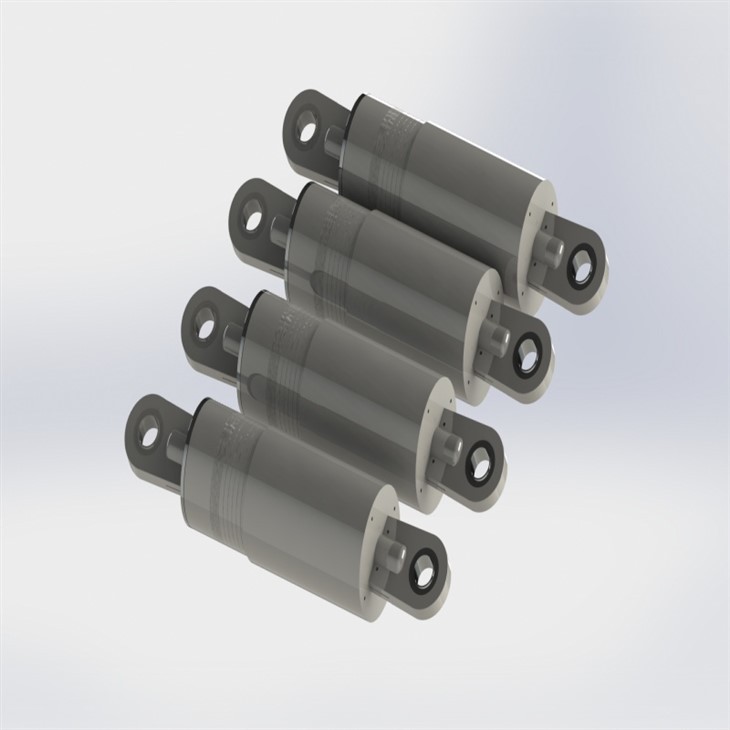
Among the various types of dampers, hydraulic dampers are widely used due to their high efficiency and reliability. Hydraulic dampers work by using a hydraulic fluid to absorb and dissipate energy. When a force is applied to the damper, the hydraulic fluid is forced through small orifices, creating resistance and converting the kinetic energy into heat.
Hydraulic dampers are commonly used in heavy - duty applications, such as in construction equipment, industrial machinery, and automotive racing. Their ability to handle large forces and provide precise control makes them an ideal choice for these demanding environments.
Conclusion
In conclusion, dampers play a multifaceted and indispensable role in a wide range of applications. From vibration damping and shock absorption to flow control and noise reduction, dampers contribute to the safety, efficiency, and performance of numerous systems. As a damper supplier, I understand the importance of providing high - quality dampers that meet the specific needs of our customers.
Whether you are in the automotive, construction, aerospace, or any other industry, if you are looking for reliable and efficient dampers, we are here to help. Our team of experts can work with you to select the right damper for your application and ensure its optimal performance. Contact us today to start a discussion about your damper requirements and explore how our products can benefit your projects.
References
- Norton, R. L. (2004). Machine Design: An Integrated Approach. Prentice Hall.
- Dimarogonas, A. D. (1996). Vibration for Engineers. Prentice Hall.
- Cengel, Y. A., & Boles, M. A. (2015). Thermodynamics: An Engineering Approach. McGraw - Hill Education.