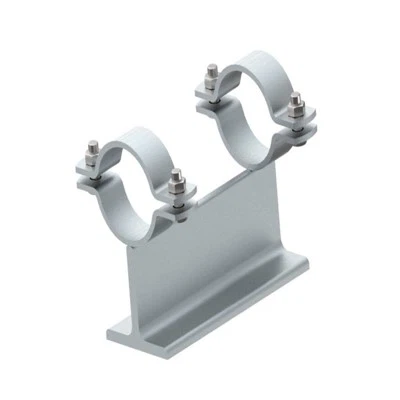
Hey there! As a supplier of rigid pipe supports, I've seen firsthand the challenges that come with using these supports in high - temperature environments. In this blog, I'll share with you the limitations of using rigid pipe supports in such conditions.
Thermal Expansion and Contraction
One of the most significant limitations of rigid pipe supports in high - temperature environments is dealing with thermal expansion and contraction. When pipes are exposed to high temperatures, they expand. Rigid pipe supports, as the name suggests, are inflexible. They don't allow for the natural movement of the pipes as they expand.
Let's say you've installed a Pipe Saddle Support in a system where the pipes carry hot fluids. As the temperature rises, the pipes will try to expand lengthwise and radially. But the rigid support holds them in place, creating a lot of stress on both the pipes and the support itself. This stress can lead to premature failure of the pipes, such as cracking or deformation. Over time, the rigid support may also get damaged, losing its ability to properly support the pipes.
On the other hand, when the temperature drops, the pipes contract. Again, the rigid support restricts this movement. This can cause the pipes to pull away from the support or create internal stresses that weaken the pipe structure. In extreme cases, the pipes may even break free from the support, which is a major safety hazard in industrial settings.
Material Degradation
High temperatures can also cause material degradation in rigid pipe supports. Most rigid pipe supports are made of metals like steel. When exposed to high temperatures for extended periods, these metals can undergo changes in their physical and chemical properties.
For instance, steel can start to lose its strength and hardness at high temperatures. This is known as thermal softening. As the support material softens, it becomes less able to bear the weight of the pipes and the forces acting on them. A T - Type Pipe Support with Wear Pad made of steel may start to deform under the load if its material has been weakened by high temperatures.
In addition to thermal softening, high - temperature environments can also lead to oxidation and corrosion of the support materials. Oxygen in the air reacts with the metal surface, forming rust or other oxide layers. These oxide layers can further weaken the support and may cause it to break down over time. Corrosion can also make the support less stable, increasing the risk of pipe failure.
Insulation Challenges
Rigid pipe supports can pose challenges when it comes to pipe insulation in high - temperature environments. Insulation is crucial for reducing heat loss from the pipes and protecting the surrounding environment. However, rigid supports can disrupt the insulation layer.
When a rigid support is installed on a pipe, it creates a direct contact point between the pipe and the support. This contact point can act as a heat bridge, allowing heat to transfer from the pipe to the support and then to the surrounding structure. As a result, the insulation's effectiveness is reduced, and more energy is wasted.
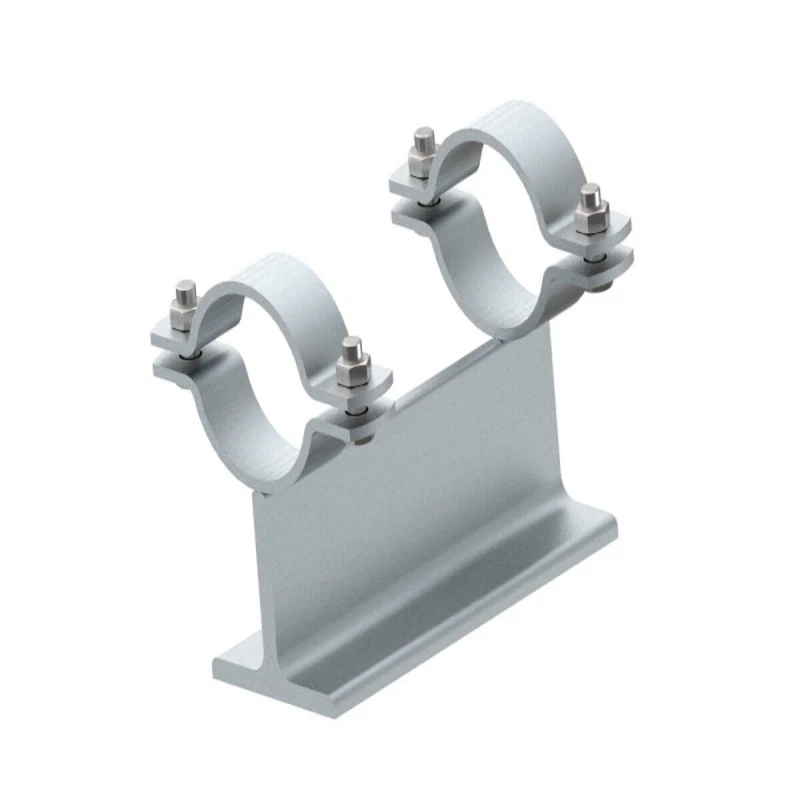
For example, if you're using a T - Type Pipe Supports with Clamp on an insulated pipe, the clamp may compress the insulation at the contact area. This compression can damage the insulation material, reducing its thermal resistance. Moreover, the rigid support may not be designed to accommodate the expansion and contraction of the insulation along with the pipe, leading to gaps in the insulation over time.

Vibration and Noise
High - temperature environments often involve fluid flow in pipes, which can cause vibration. Rigid pipe supports are not very effective at dampening these vibrations. Since they are inflexible, they transfer the vibrations directly to the surrounding structure.
These vibrations can cause several problems. First, they can lead to fatigue failure of the pipes and the support components. The continuous shaking can weaken the materials, causing cracks to form and eventually leading to failure. Second, the vibrations can generate a significant amount of noise. In industrial plants, this noise can be a nuisance to workers and may even violate noise regulations.
For example, in a power plant where hot steam is flowing through pipes supported by rigid structures, the vibrations can be quite intense. The rigid supports do little to absorb these vibrations, resulting in a noisy and potentially dangerous working environment.
Installation and Maintenance
Installing rigid pipe supports in high - temperature environments can be a tricky task. The high temperatures make it difficult to handle the support components safely. Workers need to take extra precautions to avoid burns and other heat - related injuries.
Moreover, the installation process needs to be very precise. Since rigid supports don't allow for much adjustment, any misalignment during installation can lead to problems later on. For example, if a pipe saddle support is not installed perfectly level, it can cause uneven loading on the pipe, increasing the risk of failure.
Maintenance of rigid pipe supports in high - temperature environments is also challenging. Regular inspections are necessary to check for signs of damage, such as corrosion, deformation, or cracking. However, accessing the supports in high - temperature areas can be difficult and dangerous. Workers may need to shut down the system temporarily to perform maintenance, which can result in production losses.
Conclusion
In conclusion, while rigid pipe supports have their uses in many applications, they come with several limitations in high - temperature environments. Thermal expansion and contraction, material degradation, insulation challenges, vibration and noise, and installation and maintenance difficulties are all factors that need to be considered.
If you're dealing with a high - temperature piping system, it's important to carefully evaluate whether rigid pipe supports are the best choice. There are alternative support solutions available that can better handle the challenges of high - temperature environments, such as flexible supports or spring - type supports.
If you're interested in learning more about our pipe support products or need advice on choosing the right support for your high - temperature application, feel free to reach out. We're here to help you find the best solution for your piping needs.
References
- "Handbook of Piping Design" by Cameron and Morley
- "Thermal Engineering" by R. Yadav
- Industry - standard guidelines on pipe support design and installation