Hey there! I'm a supplier of deaerators, and today I wanna chat about the special requirements for a deaerator in a marine environment. It's a topic that's super important, especially considering the unique challenges that come with operating at sea.
First off, let's talk about corrosion. The marine environment is extremely harsh, with saltwater everywhere. Saltwater is a major culprit when it comes to corrosion, and deaerators are no exception. A deaerator in a marine setting needs to be made from materials that can withstand this corrosive environment. Stainless steel is often a top choice. It has excellent corrosion - resistance properties, which helps to extend the lifespan of the deaerator. For example, 316L stainless steel is widely used in marine applications because it contains molybdenum, which enhances its resistance to pitting and crevice corrosion in saltwater.


Another key aspect is the size and weight of the deaerator. Space on a ship is limited, and every piece of equipment needs to be as compact as possible. So, the deaerator has to be designed in a way that it takes up minimal space without sacrificing its performance. At the same time, weight is also a crucial factor. A heavy deaerator can affect the ship's stability and fuel efficiency. We need to use advanced design and manufacturing techniques to make the deaerator lightweight while still maintaining its strength and functionality.
Vibration and shock resistance are also vital. Ships are constantly moving, and they experience vibrations from the engines, propellers, and waves. These vibrations can cause damage to the deaerator over time if it's not properly designed. The deaerator should be built with a sturdy structure and shock - absorbing features. We often use special mounting systems that can isolate the deaerator from the vibrations of the ship. This helps to prevent any loosening of components or damage to the internal parts of the deaerator.
In terms of performance, a deaerator in a marine environment needs to be highly efficient. It has to remove dissolved oxygen and other non - condensable gases from the feedwater effectively. This is important because oxygen in the feedwater can cause corrosion in the boiler and other parts of the ship's steam system. The deaerator should be able to achieve a very low level of dissolved oxygen, usually less than 7 ppb (parts per billion).
Now, let's talk about the control system. A reliable control system is essential for a deaerator in a marine environment. The system should be able to monitor and adjust the operation of the deaerator in real - time. It needs to respond quickly to changes in the feedwater flow rate, temperature, and pressure. For example, if the feedwater flow rate suddenly increases, the control system should be able to adjust the steam flow to the deaerator to maintain the proper operating conditions.
When it comes to maintenance, it should be as easy as possible. Since ships are often far from shore, it's not always convenient to have a full - scale maintenance team on board. The deaerator should be designed with easily accessible components for inspection and replacement. We also provide detailed maintenance manuals and online support to help the ship's crew with any maintenance issues.
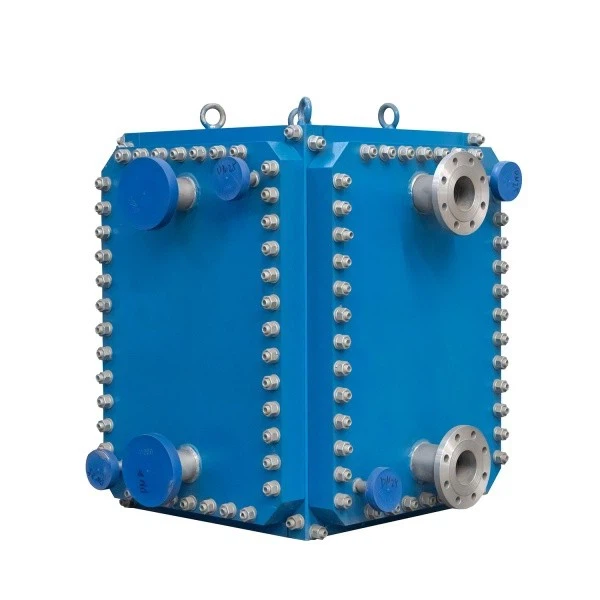
In addition to these requirements, we also offer some related products that can work in conjunction with the deaerator. For instance, the Asme Customerized Welded Plate Heat Exchanger can be used to pre - heat the feedwater before it enters the deaerator, which can improve the overall efficiency of the system. The Energy - saving Combined Air Preheater can also be used to recover waste heat and reduce energy consumption. And the CO2 Capture System can help to reduce the environmental impact of the ship's operations.
If you're in the market for a deaerator for your marine application, we're here to help. We have a team of experts who can work with you to understand your specific requirements and provide you with the best - suited deaerator. Whether it's a small fishing boat or a large cargo ship, we have the solutions. Don't hesitate to reach out to us for more information and to start the procurement and negotiation process. We're committed to providing high - quality products and excellent service to our customers.
References
- "Marine Engineering Handbook"
- "Corrosion Prevention in Marine Environments"
- "Steam System Design and Operation"