Temperature changes can have a significant impact on rigid pull rods, which are essential components in many industrial applications. As a supplier of Rigid Pull Rods, I have witnessed firsthand the effects of temperature variations on these products. In this blog post, I will explore how temperature changes affect rigid pull rods and discuss some of the considerations that engineers and manufacturers need to keep in mind.
Thermal Expansion and Contraction
One of the most obvious effects of temperature changes on rigid pull rods is thermal expansion and contraction. Like all materials, rigid pull rods expand when heated and contract when cooled. This phenomenon is governed by the coefficient of thermal expansion (CTE), which is a measure of how much a material expands or contracts per unit length per degree change in temperature.
Different materials have different coefficients of thermal expansion. For example, steel has a CTE of approximately 12 x 10^-6 /°C, while aluminum has a CTE of about 23 x 10^-6 /°C. This means that for every degree Celsius increase in temperature, a steel rigid pull rod will expand by 12 millionths of its original length, while an aluminum pull rod will expand by 23 millionths of its original length.

The thermal expansion and contraction of rigid pull rods can cause several problems. In structures where the pull rods are fixed at both ends, the expansion can lead to increased stress in the rods. If the stress exceeds the yield strength of the material, the rods may deform permanently. On the other hand, contraction during cooling can cause the rods to become loose, which may affect the stability and integrity of the entire structure.
Impact on Structural Integrity
Temperature changes can also have an impact on the structural integrity of rigid pull rods. In high - temperature environments, the strength of the material can be reduced. As the temperature rises, the atomic bonds in the metal become weaker, which leads to a decrease in its yield strength and ultimate tensile strength.
For instance, in a steel rigid pull rod, as the temperature approaches the critical temperature (around 500 - 600 °C for most steels), the mechanical properties of the steel start to deteriorate significantly. The rod may lose its ability to withstand the design loads, which can pose a serious risk to the safety of the structure.
In addition, repeated cycles of heating and cooling can cause fatigue in the rigid pull rods. Fatigue is a phenomenon where a material fails under repeated loading, even though the applied stress is below its yield strength. The thermal expansion and contraction cycles generate cyclic stresses in the rods, which can lead to the initiation and propagation of cracks over time. Once a crack reaches a critical size, the rod can fail suddenly.
Effects on Connection Points
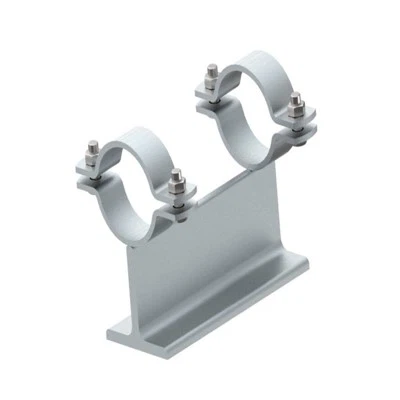
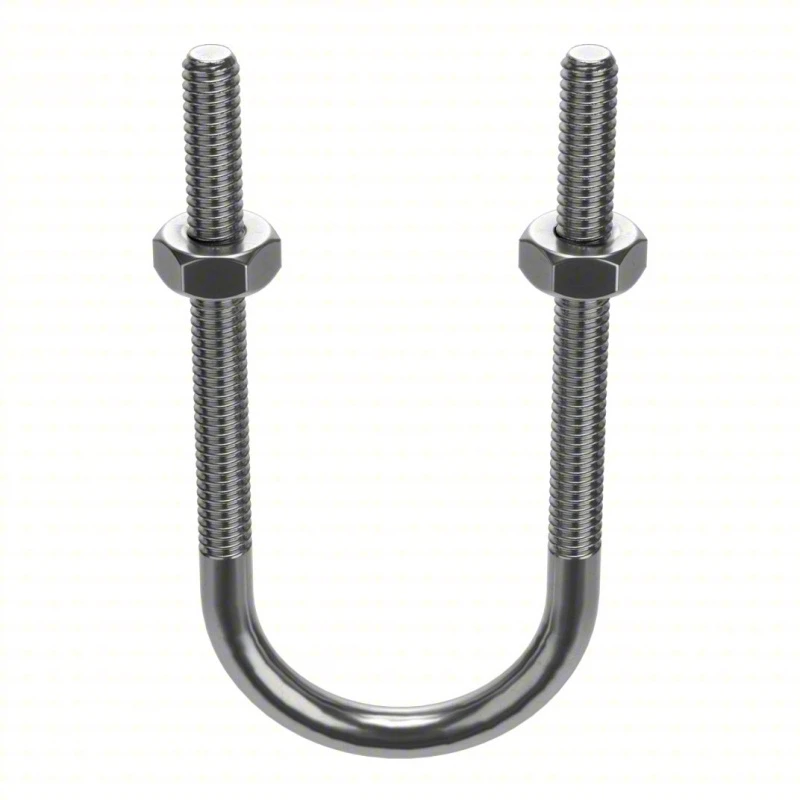
The connection points of rigid pull rods are also affected by temperature changes. U - Type Bolts and Pipe Clamps are commonly used to secure the pull rods to the structure. Thermal expansion and contraction of the pull rods can cause changes in the forces acting on these connection points.
When the pull rod expands, it may put additional pressure on the u - type bolts and pipe clamps. If these components are not designed to withstand the increased forces, they may loosen or fail. A loose connection can lead to excessive movement of the pull rod, which can in turn affect the alignment and stability of the structure.
Conversely, during cooling, the contraction of the pull rod may relieve the pressure on the connection points. However, if the connection was initially tightened to a specific torque, the change in force due to contraction may cause the connection to become under - tightened, making it vulnerable to vibrations and other dynamic loads.
Considerations for Design and Selection
When designing a system that uses rigid pull rods, engineers need to take into account the expected temperature range. They should choose materials with appropriate coefficients of thermal expansion to minimize the effects of thermal expansion and contraction. For applications where large temperature variations are expected, materials with low CTEs may be preferred.
In addition, the design of the connection points should be carefully considered. The u - type bolts and pipe clamps should be sized and installed correctly to ensure that they can withstand the forces generated by temperature changes. Regular inspections and maintenance of the connection points are also necessary to detect any signs of loosening or damage.
Another consideration is the use of thermal insulation. In some cases, insulating the rigid pull rods can help to reduce the rate of temperature change and minimize the effects of thermal expansion and contraction. This can be particularly useful in applications where the pull rods are exposed to extreme temperature gradients.
Importance of Quality Assurance
As a supplier of rigid pull rods, we understand the importance of quality assurance in ensuring the performance of our products under different temperature conditions. We use high - quality materials and advanced manufacturing processes to produce pull rods that have consistent mechanical properties.
Our quality control team conducts thorough inspections at every stage of the manufacturing process. We test the pull rods for their strength, dimensional accuracy, and resistance to corrosion. We also ensure that the surface finish of the pull rods is smooth and free of defects, which can reduce the risk of stress concentrations and fatigue failure.
Conclusion
Temperature changes can have a profound effect on rigid pull rods, from thermal expansion and contraction to impacts on structural integrity and connection points. As a supplier, we are committed to providing our customers with high - quality rigid pull rods that can withstand the challenges of temperature variations.
If you are in the market for rigid pull rods for your project, whether it is a small - scale industrial application or a large - scale infrastructure project, we are here to help. Our team of experts can provide you with customized solutions based on your specific requirements and the expected operating conditions. We invite you to contact us to discuss your needs and explore how our rigid pull rods can meet your expectations.
References
- Nickel, R., & Billington, D. P. (1995). Structural Analysis: A Historical Approach. Dover Publications.
- Shigley, J. E., & Mischke, C. R. (2001). Mechanical Engineering Design. McGraw - Hill.
- Timoshenko, S. P., & Goodier, J. N. (1970). Theory of Elasticity. McGraw - Hill.